Word Explanation
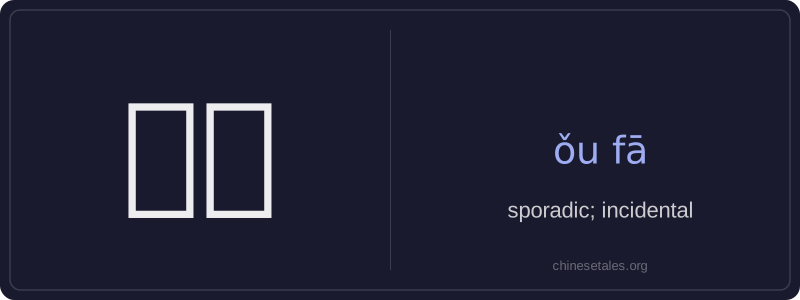
‘偶发’ (ǒu fā) is an adjective meaning 'sporadic' or 'incidental'—describing events, symptoms, or occurrences that happen irregularly, unexpectedly, and without a clear pattern. The character 偶 (ǒu) means 'occasional' or 'by chance', while 发 (fā) here functions as a verb root meaning 'to occur' or 'to arise'. Together, they form a compound emphasizing the unplanned, infrequent nature of something—not habitual, not systematic, but isolated and situational.
This word is especially common in medical, technical, and formal contexts—for example, describing rare side effects of medication, isolated equipment malfunctions, or unexpected environmental readings. It carries a neutral-to-slightly-negative connotation, often implying unpredictability or lack of controllability. While it can modify nouns directly (e.g., 偶发事件), it’s rarely used predicatively without additional structure (e.g., 不是偶发的). It’s more formal than everyday alternatives like 有时候 or 碰巧, and is seldom used in casual speech.
Example Sentences
Related Words
认同
‘认同’ (tóng rèn) is a verb meaning ‘to ident
面条
‘面条’ (miàn tiáo) literally means ‘flour str
背后
背后 literally means 'back + behind' and functions
认为
‘认为’ (rèn wéi) is a transitive verb meaning
不对
不对 (bù duì) literally combines 不 (bù), meani
中学
'Zhōngxué' literally combines 'zhōng' (middle)
见面
见面 literally means 'see face' — combining 见 (t
外语
‘外语’ literally means ‘outside language’ —