Word Explanation
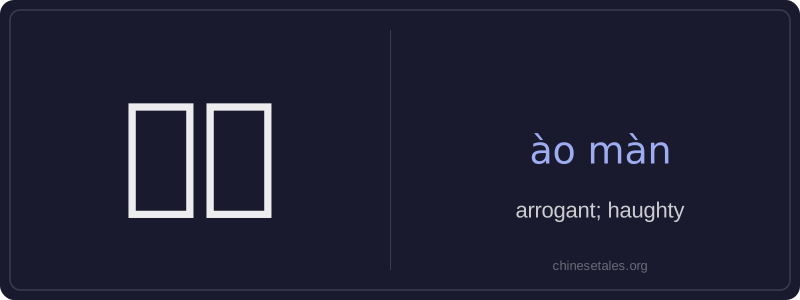
Ào màn describes a person who displays excessive pride and disdain toward others, believing themselves superior in status, ability, or worth. The first character 傲 (ào) means 'proud' or 'haughty', often with a negative connotation of arrogance rather than healthy confidence. The second character 慢 (màn) means 'disdainful' or 'contemptuous', emphasizing a lack of respect or courtesy. Together, they form a compound adjective that strongly conveys an off-putting, condescending attitude — not merely self-assured but actively dismissive of others.
This word is commonly used in formal or literary contexts to criticize behavior, especially in social, professional, or moral evaluations. It appears frequently in essays, news reports about public figures, or moral stories warning against hubris. While it can describe individuals, it’s rarely used as a noun (e.g., 'an ào màn') — instead, it modifies nouns (e.g., 'àomàn de taidu' — arrogant attitude) or functions predicatively (e.g., 'tā hěn ào màn').
Example Sentences
Related Words
认同
‘认同’ (tóng rèn) is a verb meaning ‘to ident
面条
‘面条’ (miàn tiáo) literally means ‘flour str
背后
背后 literally means 'back + behind' and functions
认为
‘认为’ (rèn wéi) is a transitive verb meaning
不对
不对 (bù duì) literally combines 不 (bù), meani
中学
'Zhōngxué' literally combines 'zhōng' (middle)
见面
见面 literally means 'see face' — combining 见 (t
外语
‘外语’ literally means ‘outside language’ —