Word Explanation
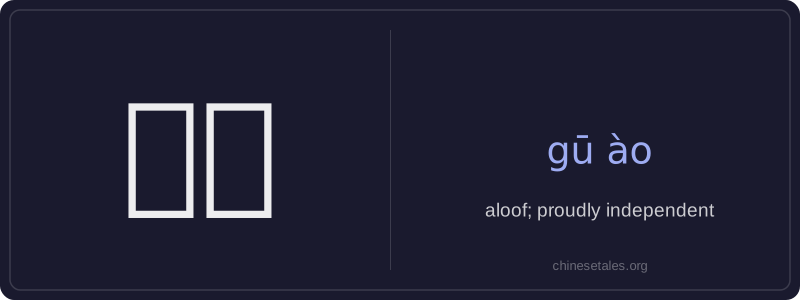
孤傲 (gū ào) describes a person who is both emotionally detached and self-assured—'孤' means 'alone, solitary', suggesting emotional distance or independence from others, while '傲' means 'proud, haughty', conveying confidence, sometimes bordering on disdain. Together, they form an adjective that captures a quiet, dignified aloofness: not unfriendly, but reserved; not arrogant in a vulgar sense, but firmly self-reliant and unswayed by social pressure.
This word often appears in literary or descriptive contexts—especially when portraying artists, scholars, or historical figures whose integrity or talent sets them apart. It carries a subtle nuance of admiration mixed with melancholy; the person is respected for their principles but may be perceived as hard to approach. It’s rarely used for casual behavior and never for children or lighthearted situations—it implies depth of character and conscious choice, not mere shyness or rudeness.
Example Sentences
Related Words
认同
‘认同’ (tóng rèn) is a verb meaning ‘to ident
面条
‘面条’ (miàn tiáo) literally means ‘flour str
背后
背后 literally means 'back + behind' and functions
认为
‘认为’ (rèn wéi) is a transitive verb meaning
不对
不对 (bù duì) literally combines 不 (bù), meani
中学
'Zhōngxué' literally combines 'zhōng' (middle)
见面
见面 literally means 'see face' — combining 见 (t
外语
‘外语’ literally means ‘outside language’ —