Word Explanation
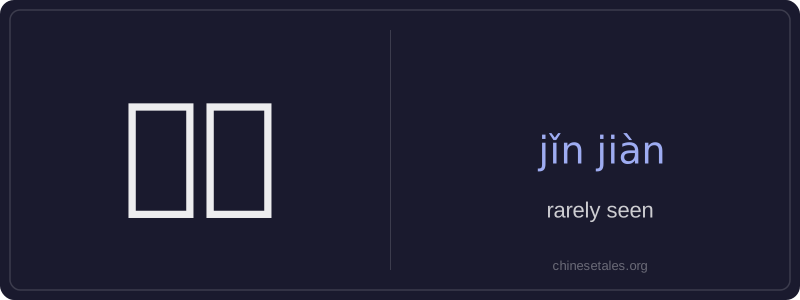
仅见 literally means 'only seen' — 仅 (jǐn) means 'only, merely', and 见 (jiàn) means 'to see' or 'to encounter'. Together, they form an adjective meaning 'rarely seen' or 'seldom encountered', emphasizing exceptional rarity. It is often used in formal, descriptive, or literary contexts — especially when highlighting the scarcity of a species, artifact, phenomenon, or event.
This term carries a tone of awe or scholarly observation and is commonly found in nature documentaries, conservation reports, museum captions, and scientific writing. It implies that something is so uncommon that it’s almost unprecedented or documented only in isolated cases. While grammatically adjectival, 仅见 typically modifies nouns directly (e.g., 仅见物种) or appears in predicate position after 是 or 为 (e.g., 此类现象极为仅见). It is not used colloquially in everyday speech.
Example Sentences
Related Words
认同
‘认同’ (tóng rèn) is a verb meaning ‘to ident
面条
‘面条’ (miàn tiáo) literally means ‘flour str
背后
背后 literally means 'back + behind' and functions
认为
‘认为’ (rèn wéi) is a transitive verb meaning
不对
不对 (bù duì) literally combines 不 (bù), meani
中学
'Zhōngxué' literally combines 'zhōng' (middle)
见面
见面 literally means 'see face' — combining 见 (t
外语
‘外语’ literally means ‘outside language’ —