Word Explanation
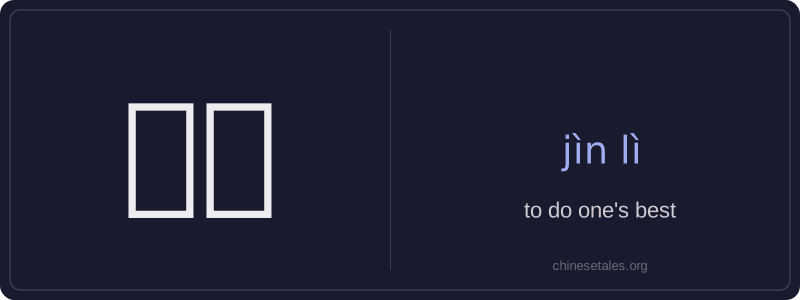
尽力 (jìn lì) literally combines 尽 (to exhaust, to use up fully) and 力 (strength, effort), meaning 'to use all one’s strength' — hence, 'to do one's best' or 'to try as hard as possible.' It expresses sincere, earnest effort without guarantee of success, emphasizing intention and commitment over outcome.
This phrase is commonly used in everyday speech and writing to encourage or describe diligent effort — for example, when studying, working, helping others, or facing challenges. It often appears with modal verbs like 会 (will), 要 (should), or 已经 (already), and can modify verbs directly or follow subject–predicate structure. While formal enough for written contexts, it remains warm and natural in spoken Chinese, especially in supportive or reflective situations.
Example Sentences
Related Words
认同
‘认同’ (tóng rèn) is a verb meaning ‘to ident
面条
‘面条’ (miàn tiáo) literally means ‘flour str
背后
背后 literally means 'back + behind' and functions
认为
‘认为’ (rèn wéi) is a transitive verb meaning
不对
不对 (bù duì) literally combines 不 (bù), meani
中学
'Zhōngxué' literally combines 'zhōng' (middle)
见面
见面 literally means 'see face' — combining 见 (t
外语
‘外语’ literally means ‘outside language’ —