Word Explanation
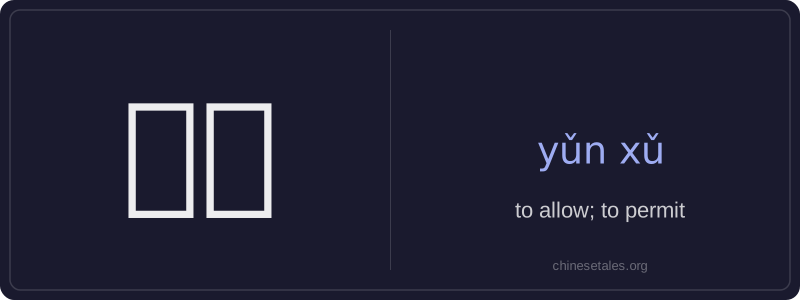
允许 is a formal, transitive verb meaning 'to allow' or 'to permit' — granting official, institutional, or authoritative consent for an action. The character 允 (yǔn) means 'to assent' or 'to agree', while 许 (xǔ) means 'to permit' or 'to approve'; together, they reinforce the idea of giving explicit permission. It’s commonly used in regulations, rules, instructions, and formal speech — for example, in school policies, workplace guidelines, or government notices.
This word implies legitimacy and authority: the subject must have the power or right to grant permission (e.g., a teacher, manager, law, or system). It’s not used for casual personal preferences ('I’d like to…') but for situations where permission is formally required or restricted. Unlike more colloquial alternatives, 允许 carries a tone of seriousness and binding obligation — if something is not allowed, it’s typically prohibited, not merely discouraged.
Example Sentences
Related Words
认同
‘认同’ (tóng rèn) is a verb meaning ‘to ident
面条
‘面条’ (miàn tiáo) literally means ‘flour str
背后
背后 literally means 'back + behind' and functions
认为
‘认为’ (rèn wéi) is a transitive verb meaning
不对
不对 (bù duì) literally combines 不 (bù), meani
中学
'Zhōngxué' literally combines 'zhōng' (middle)
见面
见面 literally means 'see face' — combining 见 (t
外语
‘外语’ literally means ‘outside language’ —