Word Explanation
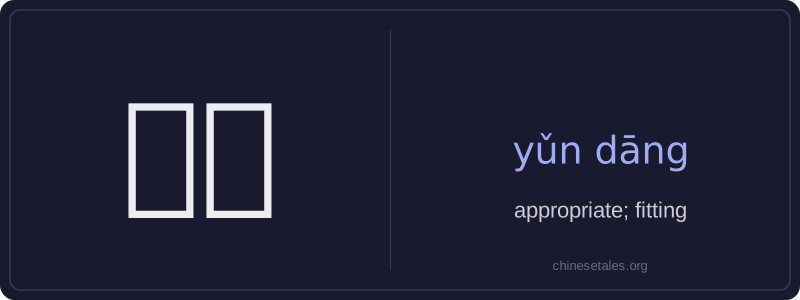
允当 (yǔn dāng) is an adjective meaning 'appropriate' or 'fitting', describing something that aligns well with a given situation, standard, or expectation. The character 允 means 'to permit' or 'to agree', suggesting acceptance based on reason or propriety; 当 means 'to be appropriate' or 'to match exactly', reinforcing the idea of precise suitability. Together, they convey a formal, somewhat literary sense of correctness—not just acceptable, but genuinely well-suited.
This term is commonly used in written Chinese and formal speech, especially when evaluating decisions, actions, titles, or responsibilities. It often appears in contexts involving judgment, duty, or social roles—for example, assessing whether someone’s conduct matches their position or whether a solution meets the requirements of a problem. While understandable in conversation, it sounds more refined than everyday alternatives like 合适 (héshì) or 恰当 (qiàdàng).
Example Sentences
Related Words
认同
‘认同’ (tóng rèn) is a verb meaning ‘to ident
面条
‘面条’ (miàn tiáo) literally means ‘flour str
背后
背后 literally means 'back + behind' and functions
认为
‘认为’ (rèn wéi) is a transitive verb meaning
不对
不对 (bù duì) literally combines 不 (bù), meani
中学
'Zhōngxué' literally combines 'zhōng' (middle)
见面
见面 literally means 'see face' — combining 见 (t
外语
‘外语’ literally means ‘outside language’ —