Word Explanation
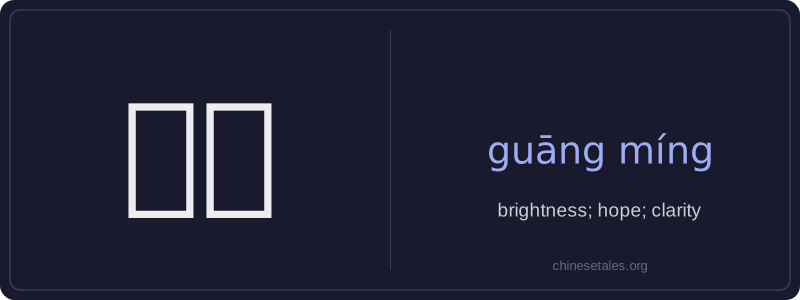
光明 literally combines 光 (guāng, 'light') and 明 (míng, 'bright' or 'clear'), together evoking the physical quality of brightness as well as powerful abstract connotations—especially hope, optimism, and moral clarity. It’s often used in formal, literary, or inspirational contexts, such as political slogans, philosophical discussions, or personal encouragement.
While it can describe literal light (e.g., sunlight piercing clouds), its most frequent use is metaphorical: a future full of promise ('a bright future'), an ethical path ('the light of justice'), or inner conviction ('seeing the light'). It appears in set phrases like 光明磊落 (guāng míng lěi luò, 'upright and open') and 光明正大 (guāng míng zhèng dà, 'honorable and aboveboard'), reinforcing ideals of transparency and integrity.
Example Sentences
Related Words
认同
‘认同’ (tóng rèn) is a verb meaning ‘to ident
面条
‘面条’ (miàn tiáo) literally means ‘flour str
背后
背后 literally means 'back + behind' and functions
认为
‘认为’ (rèn wéi) is a transitive verb meaning
不对
不对 (bù duì) literally combines 不 (bù), meani
中学
'Zhōngxué' literally combines 'zhōng' (middle)
见面
见面 literally means 'see face' — combining 见 (t
外语
‘外语’ literally means ‘outside language’ —