Word Explanation
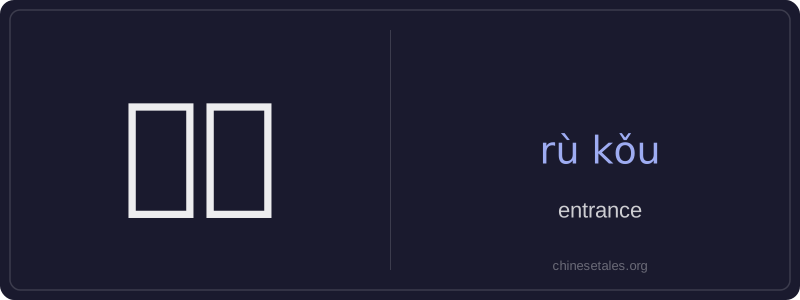
入口 (rù kǒu) literally combines 入 (rù), meaning 'to enter', and 口 (kǒu), meaning 'mouth' or 'opening'. Together, they form a compound noun meaning 'entrance'—a physical point of entry into a space, such as a building, park, subway station, or even a website interface. It emphasizes the functional role of the opening as a gateway rather than just its shape or size.
This word is commonly used in urban, architectural, and digital contexts—for example, on signs ('入口' indicates where to go in), in directions ('从东入口进入'), or in computing ('登录入口' means 'login entrance'). Unlike the more poetic or literary 门口 (ménkǒu, 'doorway') or formal 大门 (dàmén, 'main gate'), 入口 is neutral, practical, and widely understood in both spoken and written modern Chinese.
Example Sentences
Related Words
认同
‘认同’ (tóng rèn) is a verb meaning ‘to ident
面条
‘面条’ (miàn tiáo) literally means ‘flour str
背后
背后 literally means 'back + behind' and functions
认为
‘认为’ (rèn wéi) is a transitive verb meaning
不对
不对 (bù duì) literally combines 不 (bù), meani
中学
'Zhōngxué' literally combines 'zhōng' (middle)
见面
见面 literally means 'see face' — combining 见 (t
外语
‘外语’ literally means ‘outside language’ —