Word Explanation
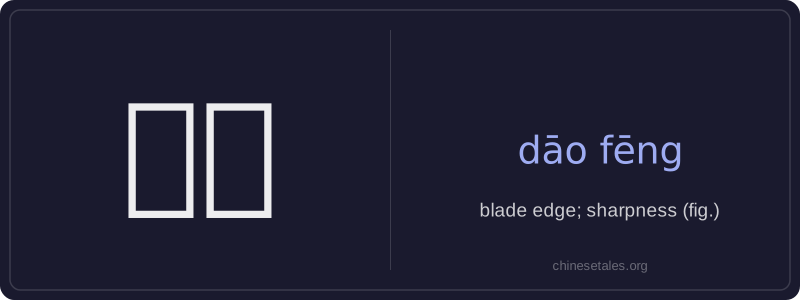
刀锋 literally means 'knife edge' — combining 刀 (dāo, 'knife' or 'blade') and 锋 (fēng, 'sharp point' or 'cutting edge'). It refers concretely to the sharpened cutting edge of a blade, such as on a knife, sword, or scalpel. This physical meaning is common in descriptions of tools, weapons, or craftsmanship.
Figuratively, 刀锋 evokes precision, intensity, or incisiveness — often used in literary or rhetorical contexts to describe something sharply perceptive, emotionally piercing, or intellectually cutting. You’ll encounter it in metaphors for clarity of thought, emotional vulnerability, or stylistic sharpness in writing or speech. While rooted in the material world of blades, its figurative use is frequent in modern Chinese prose and poetry.
Example Sentences
Related Words
认同
‘认同’ (tóng rèn) is a verb meaning ‘to ident
面条
‘面条’ (miàn tiáo) literally means ‘flour str
背后
背后 literally means 'back + behind' and functions
认为
‘认为’ (rèn wéi) is a transitive verb meaning
不对
不对 (bù duì) literally combines 不 (bù), meani
中学
'Zhōngxué' literally combines 'zhōng' (middle)
见面
见面 literally means 'see face' — combining 见 (t
外语
‘外语’ literally means ‘outside language’ —