Word Explanation
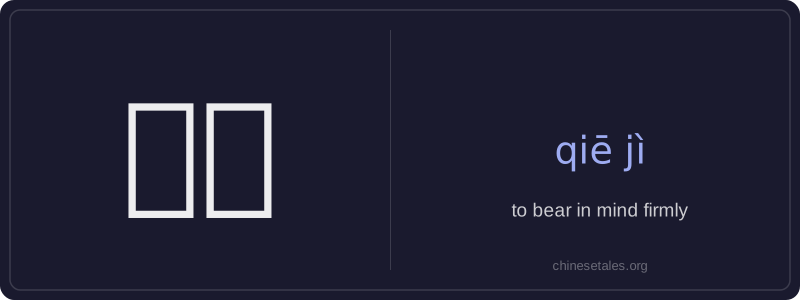
‘切记’ is a formal, emphatic verb meaning ‘to bear in mind firmly’ or ‘to remember well — and act accordingly.’ The character 切 (qiē) here means ‘urgent’ or ‘earnest,’ not its more common meaning of ‘to cut’; 记 (jì) means ‘to remember’ or ‘to keep in mind.’ Together, they form an expression that conveys strong urgency and seriousness — it’s not just casual remembering, but a committed mental note with implied responsibility to follow through.
This phrase is frequently used in instructions, warnings, advice, and public notices — especially where safety, etiquette, or important procedures are involved. It often appears at the beginning or end of a sentence for rhetorical emphasis, and is common in written Chinese (e.g., signs, manuals, teacher’s reminders) more than in casual speech. While grammatically a verb, it typically functions as an imperative or adverbial phrase, and is usually followed by a clause or infinitive-like verb phrase (e.g., 切记不要迟到).
Example Sentences
Related Words
认同
‘认同’ (tóng rèn) is a verb meaning ‘to ident
面条
‘面条’ (miàn tiáo) literally means ‘flour str
背后
背后 literally means 'back + behind' and functions
认为
‘认为’ (rèn wéi) is a transitive verb meaning
不对
不对 (bù duì) literally combines 不 (bù), meani
中学
'Zhōngxué' literally combines 'zhōng' (middle)
见面
见面 literally means 'see face' — combining 见 (t
外语
‘外语’ literally means ‘outside language’ —