Word Explanation
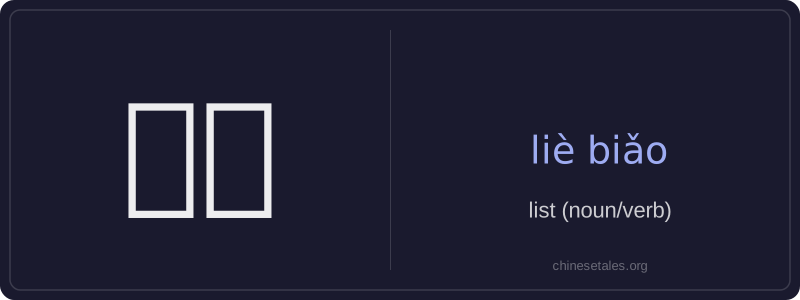
列表 literally means 'arranged column' (列) + 'chart/table' (表), and functions as both a noun meaning 'list'—a structured set of items presented in order—and as a verb meaning 'to list' or 'to enumerate'. It is commonly used in daily life for organizing information, such as shopping lists, task lists, or menu options. Unlike the more formal or literary word 目录 (mùlù, 'catalog'), 列表 implies simplicity and practicality, often appearing in digital interfaces (e.g., dropdown lists), study notes, or household planning.
The word is neutral in register and widely understood across age groups and contexts. As a noun, it’s often preceded by measure words like 个 or 一份; as a verb, it typically appears with aspect particles like 了 or 过, or in constructions like 把…列表 (‘list something’) or 列表显示 (‘display in list form’). Its compound nature makes it easy to remember: 列 suggests arrangement or alignment, while 表 conveys presentation or representation—together, they evoke an orderly, visible enumeration.
Example Sentences
Related Words
认同
‘认同’ (tóng rèn) is a verb meaning ‘to ident
面条
‘面条’ (miàn tiáo) literally means ‘flour str
背后
背后 literally means 'back + behind' and functions
认为
‘认为’ (rèn wéi) is a transitive verb meaning
不对
不对 (bù duì) literally combines 不 (bù), meani
中学
'Zhōngxué' literally combines 'zhōng' (middle)
见面
见面 literally means 'see face' — combining 见 (t
外语
‘外语’ literally means ‘outside language’ —