Word Explanation
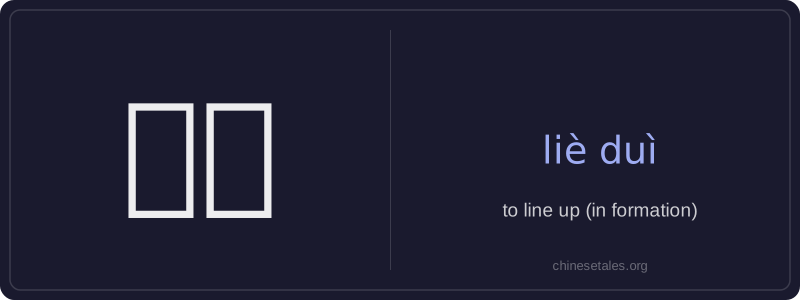
列队 literally means 'to arrange in rows' (列) and 'team/group/formation' (队), together forming the verb 'to line up in an orderly, formal formation'. It emphasizes alignment—often in straight lines or ranks—and is commonly used in contexts requiring discipline or coordination, such as military drills, school physical education classes, or parade preparations. Unlike casual standing in a row (e.g., 排队), 列队 implies intentional organization, uniform spacing, and often a leader directing the process.
The term carries a slightly formal or institutional tone and is frequently associated with group activities where appearance, precision, and collective movement matter. It can be used transitively (e.g., 列队入场 — 'line up and enter') or intransitively (e.g., 同学们开始列队 — 'the students begin to line up'). While it’s most common for people, it may occasionally describe animals or vehicles arranged deliberately—though such usage is rare and usually metaphorical or humorous.
Example Sentences
Related Words
认同
‘认同’ (tóng rèn) is a verb meaning ‘to ident
面条
‘面条’ (miàn tiáo) literally means ‘flour str
背后
背后 literally means 'back + behind' and functions
认为
‘认为’ (rèn wéi) is a transitive verb meaning
不对
不对 (bù duì) literally combines 不 (bù), meani
中学
'Zhōngxué' literally combines 'zhōng' (middle)
见面
见面 literally means 'see face' — combining 见 (t
外语
‘外语’ literally means ‘outside language’ —