Word Explanation
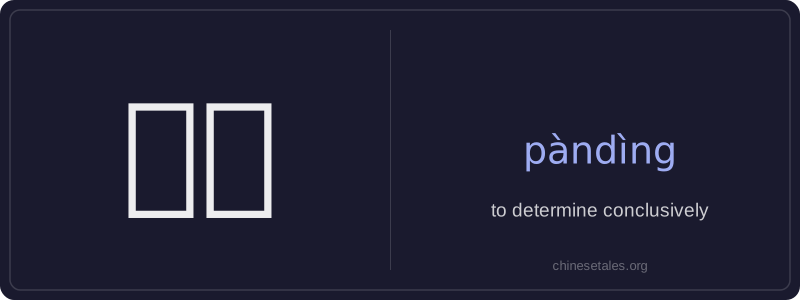
判定 means 'to determine conclusively' — it refers to reaching a formal, authoritative, or final judgment after analysis or evidence. The character 判 (pàn) carries the sense of 'to judge' or 'to distinguish', often in legal or diagnostic contexts, while 定 (dìng) means 'to decide' or 'to fix definitively'. Together, they emphasize an unambiguous conclusion, not just an opinion or guess. This word is frequently used in professional, technical, or official settings — such as medical diagnosis, legal rulings, scientific evaluation, or quality control.
Unlike more casual verbs like 决定 (to decide) or 认为 (to think/believe), 判定 implies objectivity, expertise, and finality. It's commonly followed by a noun phrase indicating the conclusion (e.g., 判定为癌症, 'diagnosed as cancer') or used with 了 to mark completion (e.g., 已判定, 'has been determined'). It rarely appears in informal speech or personal decision-making.
Example Sentences
Related Words
认同
‘认同’ (tóng rèn) is a verb meaning ‘to ident
面条
‘面条’ (miàn tiáo) literally means ‘flour str
背后
背后 literally means 'back + behind' and functions
认为
‘认为’ (rèn wéi) is a transitive verb meaning
不对
不对 (bù duì) literally combines 不 (bù), meani
中学
'Zhōngxué' literally combines 'zhōng' (middle)
见面
见面 literally means 'see face' — combining 见 (t
外语
‘外语’ literally means ‘outside language’ —