Word Explanation
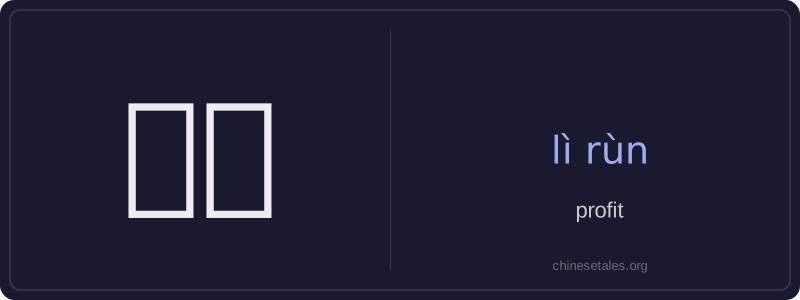
利润 (lì rùn) means 'profit' — the financial gain remaining after subtracting all costs and expenses from total revenue. The character 利 (lì) carries meanings of 'advantage', 'benefit', or 'gain', while 润 (rùn) originally means 'moisture' or 'smoothness', but in compound words like this it conveys the sense of 'enrichment' or 'added value'. Together, they evoke the idea of beneficial enrichment — a positive net return on business activity.
This word is used almost exclusively in economic, commercial, and accounting contexts — for example, when discussing company earnings, investment returns, or pricing strategies. It’s formal and neutral in register, common in news reports, business meetings, and financial statements. Unlike colloquial terms like 赚头 (zhuàn tóu, 'earnings'), 利润 is precise and standard in professional usage, and it always refers to net (not gross) profit unless otherwise specified.
Example Sentences
Related Words
认同
‘认同’ (tóng rèn) is a verb meaning ‘to ident
面条
‘面条’ (miàn tiáo) literally means ‘flour str
背后
背后 literally means 'back + behind' and functions
认为
‘认为’ (rèn wéi) is a transitive verb meaning
不对
不对 (bù duì) literally combines 不 (bù), meani
中学
'Zhōngxué' literally combines 'zhōng' (middle)
见面
见面 literally means 'see face' — combining 见 (t
外语
‘外语’ literally means ‘outside language’ —