Word Explanation
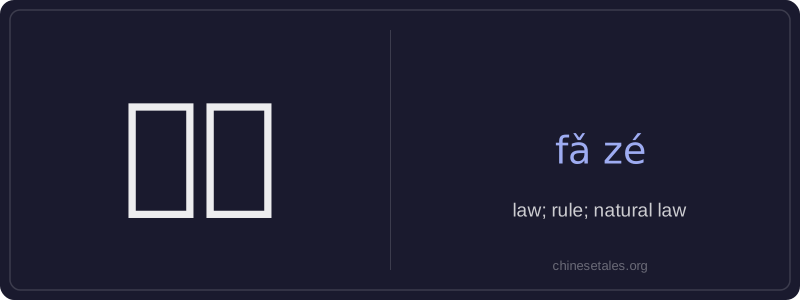
法则 (fǎ zé) is a formal noun meaning 'law', 'rule', or 'principle'—especially one that governs natural phenomena, human conduct, or logical systems. The character 法 (fǎ) means 'law', 'method', or 'standard', while 则 (zé) means 'rule', 'norm', or 'principle'; together, they emphasize an objective, often universal, standard that cannot be arbitrarily changed. Unlike colloquial terms like 规则 (guīzé), 法则 carries philosophical, scientific, or moral weight—common in discussions of physics ('laws of nature'), ethics ('moral laws'), or ecology ('survival of the fittest as a biological law').
It appears frequently in academic, literary, and technical contexts—not daily speech—and rarely stands alone without modification (e.g., 自然法则, 道德法则). Though it can refer to human-made rules, its strongest usage evokes inevitability and universality, similar to English 'law' in 'Newton’s laws' rather than 'traffic laws'.
Example Sentences
Related Words
认同
‘认同’ (tóng rèn) is a verb meaning ‘to ident
面条
‘面条’ (miàn tiáo) literally means ‘flour str
背后
背后 literally means 'back + behind' and functions
认为
‘认为’ (rèn wéi) is a transitive verb meaning
不对
不对 (bù duì) literally combines 不 (bù), meani
中学
'Zhōngxué' literally combines 'zhōng' (middle)
见面
见面 literally means 'see face' — combining 见 (t
外语
‘外语’ literally means ‘outside language’ —