Word Explanation
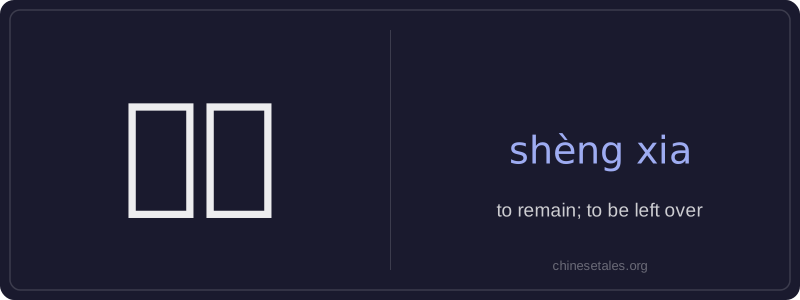
剩下 (shèng xia) is a separable verb meaning 'to remain' or 'to be left over' — literally, 'to surplus + down'. The character 剩 means 'remaining, surplus', and 下 adds directional or resultative nuance, indicating something left behind after an action (e.g., eating, using, or departing). It’s commonly used when referring to leftover food, unspent money, unsold items, or people who stay behind after others leave.
This verb functions as a predicate or complement in sentences and often appears with objects (e.g., 剩下三个人, 'three people remain') or in resultative constructions (e.g., 吃剩下, 'eat until something remains'). Unlike the stative verb 有余 (yǒu yú), which is formal and quantitative, 剩下 is neutral, colloquial, and widely used in everyday speech and writing. It implies a concrete, observable remainder — not just abstract excess.
Example Sentences
Related Words
认同
‘认同’ (tóng rèn) is a verb meaning ‘to ident
面条
‘面条’ (miàn tiáo) literally means ‘flour str
背后
背后 literally means 'back + behind' and functions
认为
‘认为’ (rèn wéi) is a transitive verb meaning
不对
不对 (bù duì) literally combines 不 (bù), meani
中学
'Zhōngxué' literally combines 'zhōng' (middle)
见面
见面 literally means 'see face' — combining 见 (t
外语
‘外语’ literally means ‘outside language’ —