Word Explanation
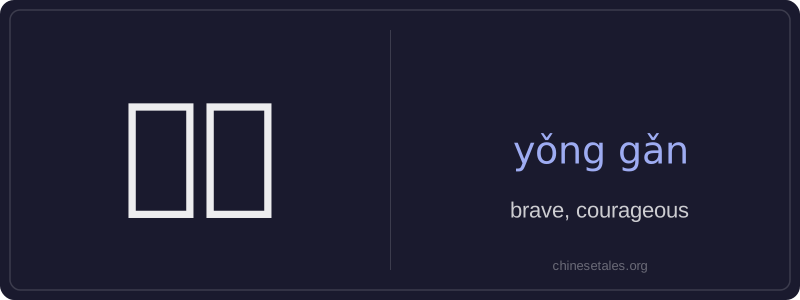
勇敢 (yǒng gǎn) is an adjective meaning 'brave' or 'courageous'—describing someone who faces danger, difficulty, or fear without flinching. The character 勇 (yǒng) means 'courage' or 'valor', often associated with moral strength and resolve; 敢 (gǎn) means 'to dare' or 'to have the courage to act', emphasizing willingness to take action despite risk. Together, they form a compound that conveys both inner fortitude and outward action—not just feeling brave, but acting bravely.
This word is commonly used to describe people (e.g., children, soldiers, activists), actions (e.g., speaking up, helping others), or qualities in stories, news reports, and everyday praise. It carries a positive, respectful tone and is appropriate in formal and informal contexts. Unlike some English synonyms, 勇敢 does not imply recklessness—it suggests thoughtful, principled courage, often in service of justice, duty, or compassion.
Example Sentences
Related Words
认同
‘认同’ (tóng rèn) is a verb meaning ‘to ident
面条
‘面条’ (miàn tiáo) literally means ‘flour str
背后
背后 literally means 'back + behind' and functions
认为
‘认为’ (rèn wéi) is a transitive verb meaning
不对
不对 (bù duì) literally combines 不 (bù), meani
中学
'Zhōngxué' literally combines 'zhōng' (middle)
见面
见面 literally means 'see face' — combining 见 (t
外语
‘外语’ literally means ‘outside language’ —