Word Explanation
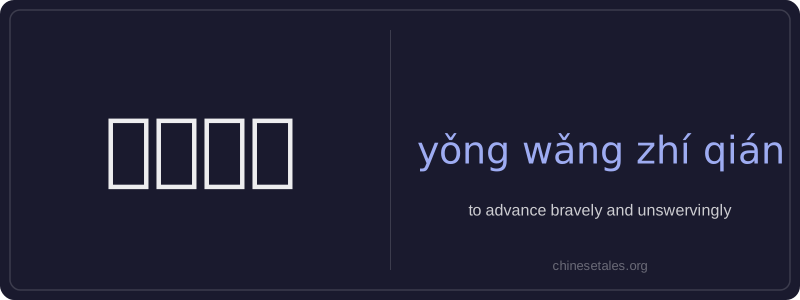
勇往直前 is an idiom meaning 'to advance bravely and unswervingly'—it conveys unwavering courage in the face of difficulty. Literally, 勇 (yǒng) means 'brave', 往 (wǎng) means 'to go toward', 直 (zhí) means 'straight', and 前 (qián) means 'forward'. Together, they form a vivid image of moving forward resolutely without hesitation or deviation, like a warrior charging straight ahead without flinching.
This phrase is commonly used in motivational contexts—speeches, slogans, essays on perseverance, or personal development. It often appears with subjects expressing determination (e.g., athletes, students, reformers) and frequently follows verbs like '要' (yào, 'must'), '应该' (yīnggāi, 'should'), or '敢于' (gǎnyú, 'dare to'). Though structurally noun-like, it functions primarily as an adverbial phrase modifying action verbs, emphasizing manner and attitude rather than describing a physical object or state.
Example Sentences
Related Words
认同
‘认同’ (tóng rèn) is a verb meaning ‘to ident
面条
‘面条’ (miàn tiáo) literally means ‘flour str
背后
背后 literally means 'back + behind' and functions
认为
‘认为’ (rèn wéi) is a transitive verb meaning
不对
不对 (bù duì) literally combines 不 (bù), meani
中学
'Zhōngxué' literally combines 'zhōng' (middle)
见面
见面 literally means 'see face' — combining 见 (t
外语
‘外语’ literally means ‘outside language’ —