Word Explanation
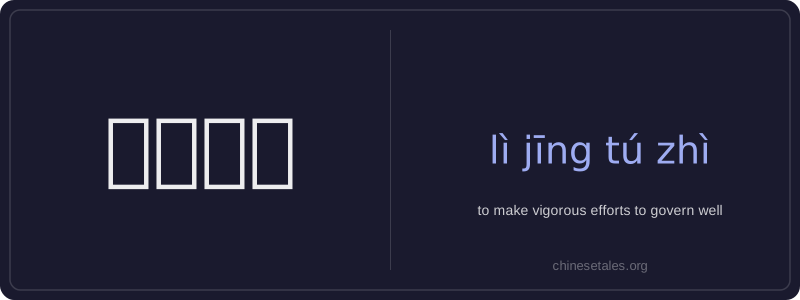
励精图治 is a classical four-character idiom meaning 'to make vigorous efforts to govern well' or 'to devote oneself wholeheartedly to improving governance and administration.' Literally, 励 (lì) means 'to encourage' or 'to exert oneself,' 精 (jīng) means 'energy' or 'vitality,' 图 (tú) means 'to plan' or 'to strive for,' and 治 (zhì) means 'governance' or 'order.' Together, they evoke the image of a ruler or leader channeling full mental and physical energy into restoring order and achieving good governance.
This idiom is most commonly used in formal or literary contexts—especially when describing historical emperors, modern leaders, or organizations undergoing reform. It carries strong positive connotations of diligence, resolve, and moral commitment to public welfare. While rooted in imperial history, it’s still actively used in news reports, political speeches, and editorial writing to praise determined leadership and institutional renewal.
Example Sentences
Related Words
认同
‘认同’ (tóng rèn) is a verb meaning ‘to ident
面条
‘面条’ (miàn tiáo) literally means ‘flour str
背后
背后 literally means 'back + behind' and functions
认为
‘认为’ (rèn wéi) is a transitive verb meaning
不对
不对 (bù duì) literally combines 不 (bù), meani
中学
'Zhōngxué' literally combines 'zhōng' (middle)
见面
见面 literally means 'see face' — combining 见 (t
外语
‘外语’ literally means ‘outside language’ —