Word Explanation
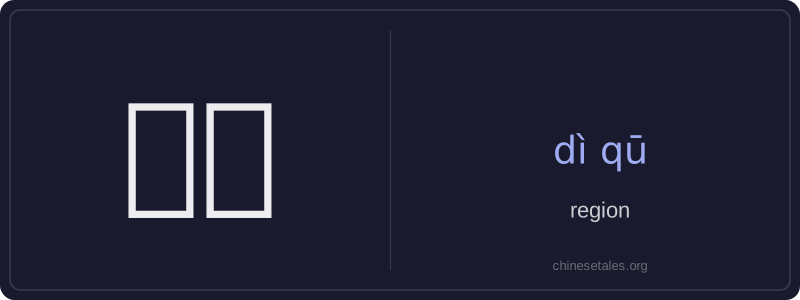
地区 (dì qū) means 'region' — a defined geographical area, often administrative or cultural in nature. The first character 地 (dì) means 'earth' or 'land', and the second character 区 (qū) means 'area', 'district', or 'zone'. Together, they form a compound noun that emphasizes a bounded portion of land with shared characteristics — such as climate, language, economy, or governance. It is more formal and neutral than colloquial terms like 地方 (dìfāng) and is commonly used in official, academic, or media contexts.
地区 can refer to large-scale divisions (e.g., East Asia as a region) or smaller local areas (e.g., a mountainous region within a province). Unlike 省 (shěng, 'province') or 市 (shì, 'city'), which denote specific administrative units, 地区 is flexible — it may be officially designated (e.g., special administrative regions) or informally recognized (e.g., farming regions, tourist regions). It rarely stands alone without modifiers or context and frequently appears after classifiers like 这个 (zhège) or in phrases like 不同地区 (bùtóng dìqū, 'different regions').
Example Sentences
Related Words
认同
‘认同’ (tóng rèn) is a verb meaning ‘to ident
面条
‘面条’ (miàn tiáo) literally means ‘flour str
背后
背后 literally means 'back + behind' and functions
认为
‘认为’ (rèn wéi) is a transitive verb meaning
不对
不对 (bù duì) literally combines 不 (bù), meani
中学
'Zhōngxué' literally combines 'zhōng' (middle)
见面
见面 literally means 'see face' — combining 见 (t
外语
‘外语’ literally means ‘outside language’ —