Word Explanation
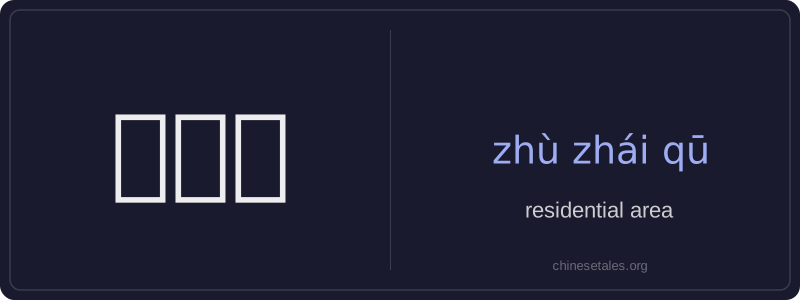
住宅区 literally means 'residence-dwelling-area' — combining 住 (to live), 宅 (residence, dwelling), and 区 (area, district). It refers to a designated geographic zone primarily intended for housing, such as apartment complexes, suburban neighborhoods, or gated communities. Unlike broader terms like 城市 (city) or 社区 (community), 住宅区 emphasizes function: it’s where people live, not where they work or shop.
This term is commonly used in urban planning, real estate, transportation announcements, and daily conversation when describing location or zoning. It often appears in official signage (e.g., '住宅区限速30公里'), property listings, or directions ('往东走两个路口就到住宅区了'). While similar to 小区 (residential compound), 住宅区 is more formal and can refer to larger, city-planned zones — sometimes encompassing multiple smaller 小区.
Example Sentences
Related Words
认同
‘认同’ (tóng rèn) is a verb meaning ‘to ident
面条
‘面条’ (miàn tiáo) literally means ‘flour str
背后
背后 literally means 'back + behind' and functions
认为
‘认为’ (rèn wéi) is a transitive verb meaning
不对
不对 (bù duì) literally combines 不 (bù), meani
中学
'Zhōngxué' literally combines 'zhōng' (middle)
见面
见面 literally means 'see face' — combining 见 (t
外语
‘外语’ literally means ‘outside language’ —