Word Explanation
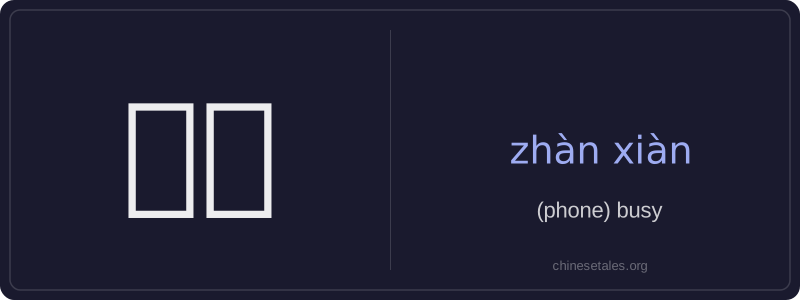
‘占线’ literally means ‘occupying the line’ — 占 (zhàn) means ‘to occupy’ or ‘to take up’, and 线 (xiàn) means ‘line’, specifically a telephone line. Together, they form a noun meaning ‘(phone) busy’ — the state when a phone line is in use and cannot accept another call. It’s commonly used in spoken and informal written Chinese, especially when reporting or explaining why a call failed to connect.
This term originated in the era of landline telephones, where physical circuit lines were shared; if someone was already using the line, others would hear a busy tone (忙音). Though less literal today with digital and mobile networks, ‘占线’ remains widely understood and used in everyday contexts — for example, when calling customer service, a friend, or an office. It implies temporary unavailability due to ongoing communication, not permanent disconnection or technical failure.
Example Sentences
Related Words
认同
‘认同’ (tóng rèn) is a verb meaning ‘to ident
面条
‘面条’ (miàn tiáo) literally means ‘flour str
背后
背后 literally means 'back + behind' and functions
认为
‘认为’ (rèn wéi) is a transitive verb meaning
不对
不对 (bù duì) literally combines 不 (bù), meani
中学
'Zhōngxué' literally combines 'zhōng' (middle)
见面
见面 literally means 'see face' — combining 见 (t
外语
‘外语’ literally means ‘outside language’ —