Word Explanation
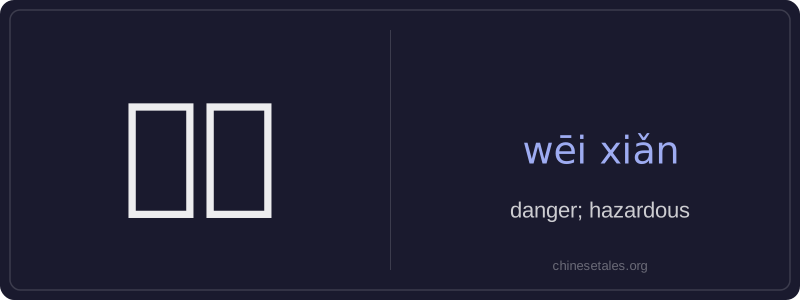
'危险' (wēi xiǎn) is a compound word meaning 'danger' or 'hazard'. The first character 危 (wēi) means 'perilous' or 'precarious', often implying imminent threat or instability; the second character 险 (xiǎn) means 'risk', 'peril', or 'hazardous condition'. Together, they reinforce each other to convey a strong sense of potential harm, injury, or adverse consequence. It functions both as a noun ('There is danger') and as an adjective ('a dangerous situation'), commonly used in safety warnings, medical contexts, news reports, and everyday cautionary speech.
The term appears frequently in public signage (e.g., '危险!高压电' — 'Danger! High voltage'), health advisories ('这个药物有危险副作用' — 'This drug has dangerous side effects'), and discussions about risky behavior. While it can describe physical threats (e.g., fire, traffic), it’s also used abstractly for emotional, financial, or social risks — though less commonly than in concrete, life-threatening contexts.
Example Sentences
Related Words
认同
‘认同’ (tóng rèn) is a verb meaning ‘to ident
面条
‘面条’ (miàn tiáo) literally means ‘flour str
背后
背后 literally means 'back + behind' and functions
认为
‘认为’ (rèn wéi) is a transitive verb meaning
不对
不对 (bù duì) literally combines 不 (bù), meani
中学
'Zhōngxué' literally combines 'zhōng' (middle)
见面
见面 literally means 'see face' — combining 见 (t
外语
‘外语’ literally means ‘outside language’ —