Word Explanation
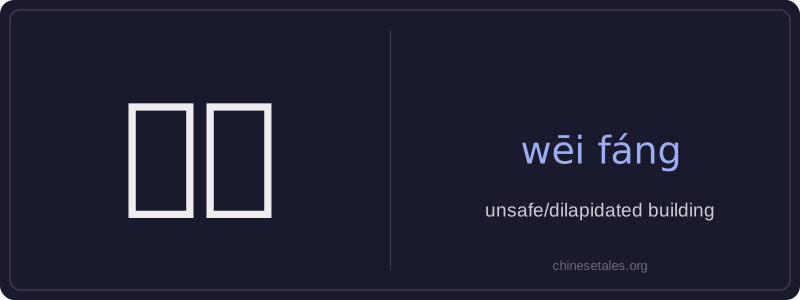
‘危房’ literally combines 危 (wēi), meaning 'dangerous' or 'precarious', and 房 (fáng), meaning 'building' or 'house'. Together, it refers specifically to a building that is structurally unsound—often due to age, poor construction, earthquake damage, or lack of maintenance—and therefore unsafe for occupancy. It’s a formal, official term frequently used in urban planning, housing inspections, safety regulations, and government notices.
The word carries serious connotations: calling a building a 危房 implies an imminent risk of collapse or injury, not just general disrepair. It’s commonly found in administrative documents, news reports about disasters or demolition projects, and public safety announcements. Unlike casual terms like 破房子 (broken house), 危房 is a technical classification with legal and safety implications—often triggering mandatory evacuation, renovation, or demolition.
Example Sentences
Related Words
认同
‘认同’ (tóng rèn) is a verb meaning ‘to ident
面条
‘面条’ (miàn tiáo) literally means ‘flour str
背后
背后 literally means 'back + behind' and functions
认为
‘认为’ (rèn wéi) is a transitive verb meaning
不对
不对 (bù duì) literally combines 不 (bù), meani
中学
'Zhōngxué' literally combines 'zhōng' (middle)
见面
见面 literally means 'see face' — combining 见 (t
外语
‘外语’ literally means ‘outside language’ —