Word Explanation
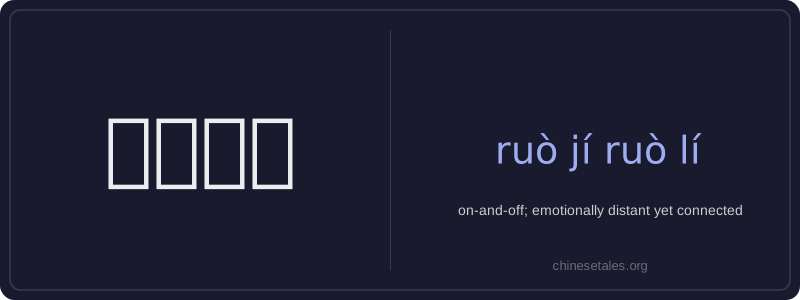
'Ruò jí ruò lí' (若即若离) is a classical four-character idiom describing a relationship or connection that is simultaneously close and distant — neither fully intimate nor completely detached. Literally, 'ruò' means 'as if' or 'seemingly'; 'jí' means 'to approach' or 'to be near'; 'lí' means 'to depart' or 'to separate'. So the phrase paints a vivid image of someone or something hovering at the threshold of closeness and distance, like a flickering flame — present but untouchable, engaged yet reserved.
This idiom is most commonly used to describe emotional ambiguity in interpersonal relationships: romantic partners who avoid commitment, friends who stay in contact sporadically, or even abstract things like elusive opportunities or half-understood ideas. It carries a subtle, often slightly melancholy or sophisticated tone — not neutral, but evocative of complexity and restraint. It’s frequently found in literature, film reviews, and psychological descriptions, rarely in casual speech.
Example Sentences
Related Words
认同
‘认同’ (tóng rèn) is a verb meaning ‘to ident
面条
‘面条’ (miàn tiáo) literally means ‘flour str
背后
背后 literally means 'back + behind' and functions
认为
‘认为’ (rèn wéi) is a transitive verb meaning
不对
不对 (bù duì) literally combines 不 (bù), meani
中学
'Zhōngxué' literally combines 'zhōng' (middle)
见面
见面 literally means 'see face' — combining 见 (t
外语
‘外语’ literally means ‘outside language’ —