Word Explanation
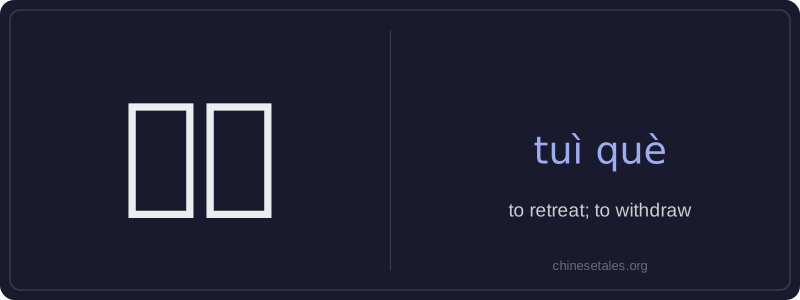
退却 is a formal, literary verb meaning 'to retreat' or 'to withdraw', often implying a strategic, reluctant, or defensive pulling back—physically, emotionally, or metaphorically. The character 退 means 'to withdraw, to step back', while 却 carries the sense of 'to repel, to refuse, or to reverse'. Together, they reinforce the idea of turning away from something challenging, dangerous, or undesirable. Unlike simpler verbs like 后退 (to move backward), 退却 suggests psychological hesitation or loss of resolve, commonly used in military, political, or personal struggle contexts.
This word appears frequently in written Chinese—news reports, historical narratives, and motivational speeches—but is rare in casual speech. It often pairs with subjects like 军队 (army), 勇气 (courage), or 意志 (willpower), and can be modified by adverbs like 不敢 (dare not) or 勇于 (brave enough to). While it can describe physical movement, its primary nuance is internal: yielding under pressure, abandoning effort, or losing conviction.
Example Sentences
Related Words
认同
‘认同’ (tóng rèn) is a verb meaning ‘to ident
面条
‘面条’ (miàn tiáo) literally means ‘flour str
背后
背后 literally means 'back + behind' and functions
认为
‘认为’ (rèn wéi) is a transitive verb meaning
不对
不对 (bù duì) literally combines 不 (bù), meani
中学
'Zhōngxué' literally combines 'zhōng' (middle)
见面
见面 literally means 'see face' — combining 见 (t
外语
‘外语’ literally means ‘outside language’ —