Word Explanation
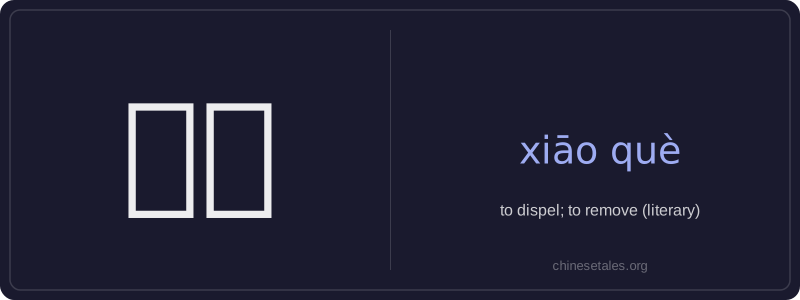
消却 (xiāo què) is a literary, formal verb meaning 'to dispel', 'to remove', or 'to eliminate'—especially abstract things like worries, doubts, fears, or obstacles. The character 消 (xiāo) means 'to disappear', 'to vanish', or 'to consume', while 却 (què) functions here as a classical particle meaning 'to repel', 'to reject', or 'to remove'. Together, they form a compound emphasizing the complete and decisive removal of something intangible or burdensome.
This word appears most often in written Chinese—such as essays, poetry, historical texts, or formal speeches—and is rarely used in casual spoken conversation. It conveys a sense of resolution, calm, or mastery over inner turmoil or external hindrances. Because of its literary register, learners should avoid using it in everyday speech unless aiming for rhetorical effect or quoting classical sources.
Example Sentences
Related Words
认同
‘认同’ (tóng rèn) is a verb meaning ‘to ident
面条
‘面条’ (miàn tiáo) literally means ‘flour str
背后
背后 literally means 'back + behind' and functions
认为
‘认为’ (rèn wéi) is a transitive verb meaning
不对
不对 (bù duì) literally combines 不 (bù), meani
中学
'Zhōngxué' literally combines 'zhōng' (middle)
见面
见面 literally means 'see face' — combining 见 (t
外语
‘外语’ literally means ‘outside language’ —