Word Explanation
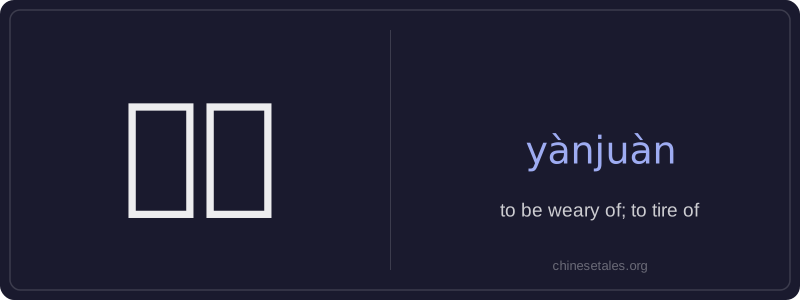
厌倦 (yànjuàn) is a compound verb meaning 'to be weary of' or 'to tire of' something after prolonged exposure, repetition, or lack of interest. The first character 厌 (yàn) means 'to dislike' or 'to loathe', often carrying a sense of aversion or satiety; the second character 倦 (juàn) means 'tired' or 'fatigued', especially mentally or emotionally. Together, they express a deep, sustained weariness—not just physical exhaustion, but emotional or psychological disengagement from an activity, person, or situation.
This word is commonly used in formal and semi-formal contexts to describe long-term dissatisfaction, such as with routine work, repetitive tasks, or enduring relationships. It implies a gradual loss of enthusiasm rather than sudden anger or annoyance. While it can describe personal feelings ('I’m tired of this job'), it’s also frequently used impersonally ('This topic has made students weary'). It’s stronger than 没兴趣 (not interested) but milder than 憎恨 (to hate).
Example Sentences
Related Words
认同
‘认同’ (tóng rèn) is a verb meaning ‘to ident
面条
‘面条’ (miàn tiáo) literally means ‘flour str
背后
背后 literally means 'back + behind' and functions
认为
‘认为’ (rèn wéi) is a transitive verb meaning
不对
不对 (bù duì) literally combines 不 (bù), meani
中学
'Zhōngxué' literally combines 'zhōng' (middle)
见面
见面 literally means 'see face' — combining 见 (t
外语
‘外语’ literally means ‘outside language’ —