Word Explanation
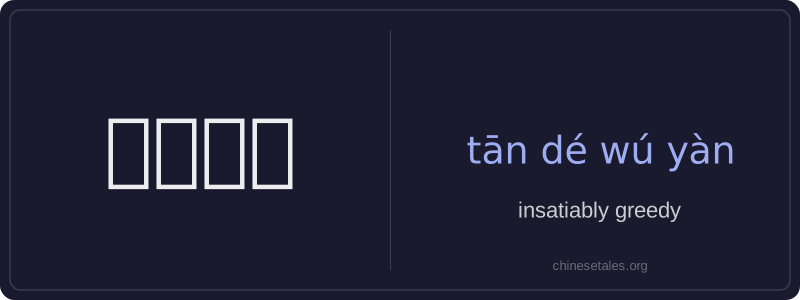
贪得无厌 literally breaks down as 'greedy' (贪), 'gain/obtain' (得), 'without' (无), and 'satiety/aversion' (厌). Together, it describes a person or attitude marked by endless, unreasonable desire—never satisfied no matter how much is acquired. It carries strong negative connotation, implying moral failing or dangerous excess, often used to criticize selfishness, corruption, or unchecked ambition.
The phrase functions as a fixed four-character idiom (chengyu) and typically modifies nouns (e.g., 贪得无厌的人) or serves as a predicate (e.g., 他贪得无厌). It’s common in formal writing, news reports, literature, and moral discourse—but rarely used lightly or humorously. Unlike neutral terms for 'greedy', 贪得无厌 emphasizes the pathological, unquenchable nature of the desire, suggesting an inability—or unwillingness—to stop acquiring, whether money, power, attention, or material goods.
Example Sentences
Related Words
认同
‘认同’ (tóng rèn) is a verb meaning ‘to ident
面条
‘面条’ (miàn tiáo) literally means ‘flour str
背后
背后 literally means 'back + behind' and functions
认为
‘认为’ (rèn wéi) is a transitive verb meaning
不对
不对 (bù duì) literally combines 不 (bù), meani
中学
'Zhōngxué' literally combines 'zhōng' (middle)
见面
见面 literally means 'see face' — combining 见 (t
外语
‘外语’ literally means ‘outside language’ —