Word Explanation
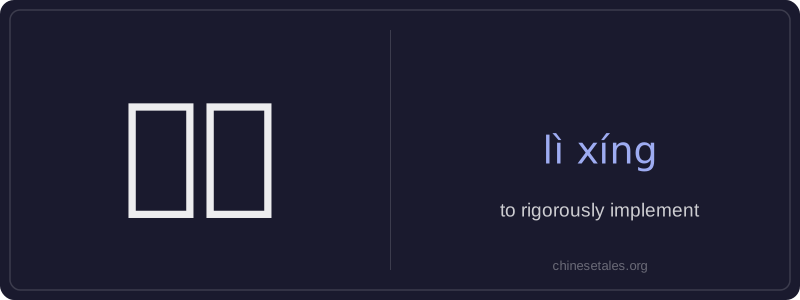
‘厉行’ is a formal, written verb meaning ‘to rigorously implement’ or ‘to strictly enforce’. The character 厉 (lì) conveys intensity, severity, or strictness—like ‘strict’ or ‘vigorous’—while 行 (xíng) means ‘to carry out’ or ‘to execute’. Together, they emphasize determined, unwavering action in applying rules, policies, or standards. It’s rarely used in casual speech and appears most often in official documents, news reports, policy announcements, and formal essays.
This term commonly modifies abstract nouns like 节约 (jiéyuē, ‘conservation’), 法治 (fǎzhì, ‘rule of law’), or 反腐 (fǎnfǔ, ‘anti-corruption’). It implies not just implementation, but thorough, uncompromising execution—often with institutional authority behind it. Learners should note that 厉行 is almost always followed directly by a noun (e.g., 厉行节约), never by a verb or clause; using it before a verb like ‘do’ or ‘enforce’ would be ungrammatical.
Example Sentences
Related Words
认同
‘认同’ (tóng rèn) is a verb meaning ‘to ident
面条
‘面条’ (miàn tiáo) literally means ‘flour str
背后
背后 literally means 'back + behind' and functions
认为
‘认为’ (rèn wéi) is a transitive verb meaning
不对
不对 (bù duì) literally combines 不 (bù), meani
中学
'Zhōngxué' literally combines 'zhōng' (middle)
见面
见面 literally means 'see face' — combining 见 (t
外语
‘外语’ literally means ‘outside language’ —