Word Explanation
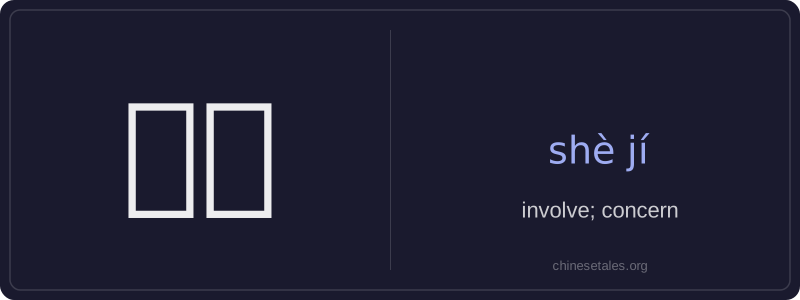
涉及 is a transitive verb meaning 'to involve' or 'to concern'—it indicates that something is connected to, affects, or falls within the scope of a particular subject, issue, or activity. The first character 涉 (shè) originally means 'to wade across water', suggesting entering or engaging with something; the second character 及 (jí) means 'to reach' or 'to extend to'. Together, they convey the idea of 'reaching into and becoming part of' a matter — emphasizing inclusion or relevance rather than active participation. It's commonly used in formal, written, or professional contexts: reports, news articles, legal documents, academic discussions, and official announcements.
The word typically follows a subject and precedes the thing being involved or concerned — for example, 'This policy involves environmental protection' becomes 这项政策涉及环境保护. It’s rarely used in casual speech; native speakers often prefer simpler verbs like 有关系 (yǒu guānxi) or 包含 (bāohán) in everyday conversation. 涉及 does not take aspect particles like 了 or 过 directly unless embedded in a larger verbal construction.
Example Sentences
Related Words
认同
‘认同’ (tóng rèn) is a verb meaning ‘to ident
面条
‘面条’ (miàn tiáo) literally means ‘flour str
背后
背后 literally means 'back + behind' and functions
认为
‘认为’ (rèn wéi) is a transitive verb meaning
不对
不对 (bù duì) literally combines 不 (bù), meani
中学
'Zhōngxué' literally combines 'zhōng' (middle)
见面
见面 literally means 'see face' — combining 见 (t
外语
‘外语’ literally means ‘outside language’ —