Word Explanation
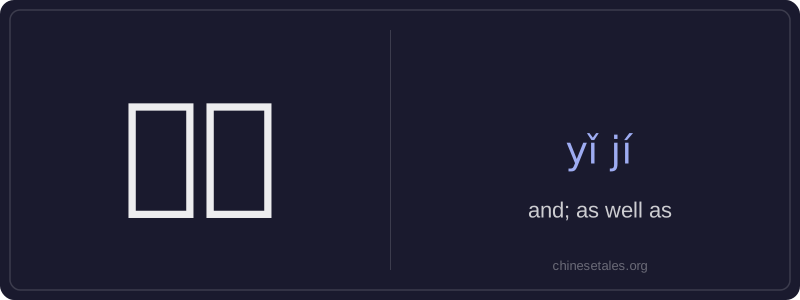
以及 (yǐ jí) is a formal conjunction meaning 'and' or 'as well as', used to connect nouns, noun phrases, or clauses—especially in written Chinese and formal speech. It carries a slightly more literary or precise tone than the common 和 (hé), and often implies an additive, non-exhaustive list where the second item may be of equal or slightly lesser importance. The character 以 means 'by means of' or 'with', and 及 means 'to reach' or 'as well as'; together, they convey the sense of 'extending to include'. Unlike 和, 以及 is rarely used to join verbs or adjectives.
This word appears frequently in academic writing, official documents, news reports, and formal presentations. It helps create balanced, polished sentence structures—especially when listing multiple items where clarity and hierarchy matter. Learners should avoid using 以及 in casual conversation; it sounds stiff or overly serious among friends. Also, never place it at the beginning of a sentence—it always connects elements within a clause.
Example Sentences
Related Words
认同
‘认同’ (tóng rèn) is a verb meaning ‘to ident
面条
‘面条’ (miàn tiáo) literally means ‘flour str
背后
背后 literally means 'back + behind' and functions
认为
‘认为’ (rèn wéi) is a transitive verb meaning
不对
不对 (bù duì) literally combines 不 (bù), meani
中学
'Zhōngxué' literally combines 'zhōng' (middle)
见面
见面 literally means 'see face' — combining 见 (t
外语
‘外语’ literally means ‘outside language’ —