Word Explanation
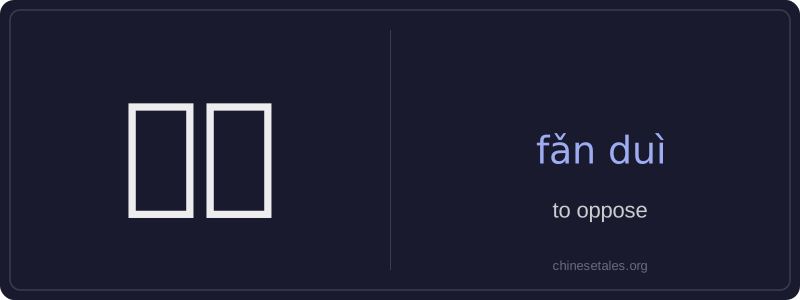
反对 means 'to oppose' or 'to be against' something — a person, idea, action, or proposal. The character 反 (fǎn) carries the core meaning of 'against', 'reversed', or 'opposite', while 对 (duì) here functions as a complement indicating direction or target — literally 'to face/aim at', so together they form a verb meaning 'to stand against (something)'. It is commonly used in formal and informal contexts alike, especially when expressing disagreement with policies, plans, decisions, or behaviors.
This verb typically takes a noun or clause as its object and often appears in written reports, news headlines, public debates, and everyday conversation. It can be used transitively ('oppose X') or intransitively ('express opposition'), and frequently pairs with words like 强烈 (strongly), 明确 (clearly), or 坚决 (firmly) to indicate intensity. Unlike some English synonyms, 反对 does not inherently imply hostility — it can express principled, respectful, or reasoned disagreement.
Example Sentences
Related Words
认同
‘认同’ (tóng rèn) is a verb meaning ‘to ident
面条
‘面条’ (miàn tiáo) literally means ‘flour str
背后
背后 literally means 'back + behind' and functions
认为
‘认为’ (rèn wéi) is a transitive verb meaning
不对
不对 (bù duì) literally combines 不 (bù), meani
中学
'Zhōngxué' literally combines 'zhōng' (middle)
见面
见面 literally means 'see face' — combining 见 (t
外语
‘外语’ literally means ‘outside language’ —