Word Explanation
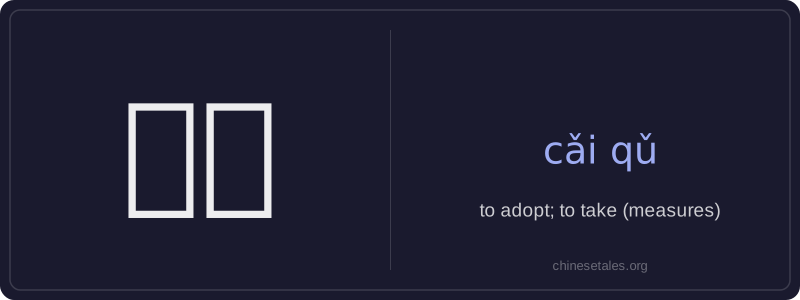
‘采取’ is a compound verb meaning 'to adopt' or 'to take (action/measures)'. It combines the characters 采 (cǎi), which originally means 'to pick' or 'to gather', and 取 (qǔ), meaning 'to take' or 'to obtain'. Together, they convey the idea of deliberately selecting and implementing a course of action — especially formal, planned, or strategic steps. It’s commonly used in written and semi-formal spoken Chinese, especially when discussing policy, responses to problems, medical treatments, or organizational decisions.
The word typically appears before nouns like 措施 (measures), 行动 (action), 政策 (policy), or 方法 (method). It rarely stands alone and almost never takes aspect particles like 了 or 过 directly — instead, these attach to the object or follow a full verb phrase (e.g., 采取了有效措施). It implies intentionality and agency, and is seldom used for spontaneous or physical actions.
Example Sentences
Related Words
认同
‘认同’ (tóng rèn) is a verb meaning ‘to ident
面条
‘面条’ (miàn tiáo) literally means ‘flour str
背后
背后 literally means 'back + behind' and functions
认为
‘认为’ (rèn wéi) is a transitive verb meaning
不对
不对 (bù duì) literally combines 不 (bù), meani
中学
'Zhōngxué' literally combines 'zhōng' (middle)
见面
见面 literally means 'see face' — combining 见 (t
外语
‘外语’ literally means ‘outside language’ —