Word Explanation
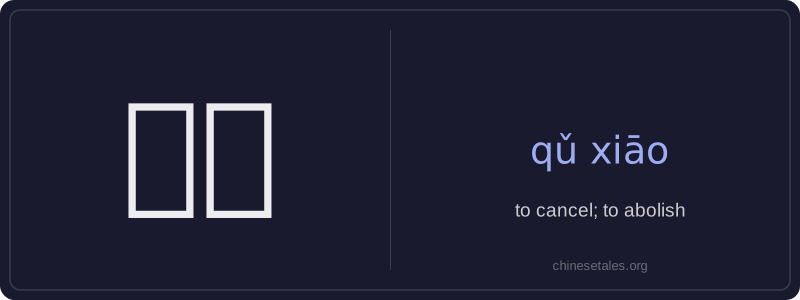
取消 (qǔ xiāo) is a transitive verb meaning 'to cancel' or 'to abolish' — it refers to formally ending, revoking, or nullifying something that was previously scheduled, approved, or in effect. The first character 取 (qǔ) means 'to take' or 'to obtain', and 消 (xiāo) means 'to disappear' or 'to eliminate'; together, they convey the idea of 'taking away' an arrangement or condition so that it ceases to exist. It's commonly used for events, appointments, subscriptions, policies, orders, and official decisions.
This word carries a neutral-to-formal register and appears frequently in both spoken and written Chinese — especially in administrative, digital (e.g., app interfaces), and service contexts. Unlike more colloquial alternatives like 取掉 (qǔ diào) or 删掉 (shān diào), 取消 implies intentionality and official validity; it’s not used for physical removal or casual deletion. It often appears with objects like 会议 (meeting), 订单 (order), 会员 (membership), or 协议 (agreement).
Example Sentences
Related Words
认同
‘认同’ (tóng rèn) is a verb meaning ‘to ident
面条
‘面条’ (miàn tiáo) literally means ‘flour str
背后
背后 literally means 'back + behind' and functions
认为
‘认为’ (rèn wéi) is a transitive verb meaning
不对
不对 (bù duì) literally combines 不 (bù), meani
中学
'Zhōngxué' literally combines 'zhōng' (middle)
见面
见面 literally means 'see face' — combining 见 (t
外语
‘外语’ literally means ‘outside language’ —