Word Explanation
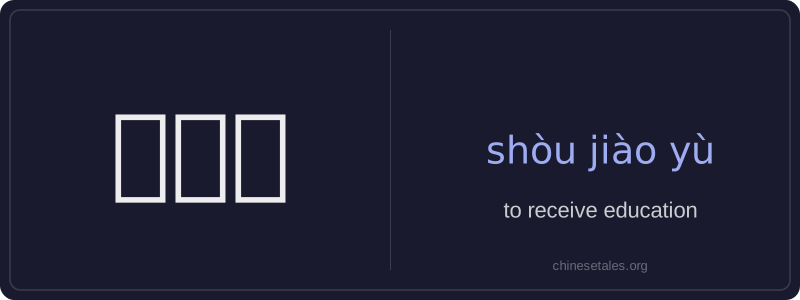
受教育 is a verb meaning 'to receive education' or 'to be educated'. It combines three characters: 受 (shòu) meaning 'to receive' or 'to undergo', 教 (jiào) meaning 'to teach', and 育 (yù) meaning 'to nurture' or 'to raise'. Together, they form a formal, standard term emphasizing the process of being taught and developed intellectually and morally — not just schooling, but broader learning and cultivation. It's commonly used in official contexts, policy documents, news reports, and academic writing.
This phrase often appears with subjects like students, children, citizens, or groups (e.g., rural youth), and frequently co-occurs with verbs like 应该 (should), 需要 (need to), or has been completed (e.g., 已受教育). It is rarely used in casual speech; native speakers usually say 上学 (go to school) or 念书 (study) in everyday conversation. The term carries a sense of social responsibility and institutional involvement in learning.
Example Sentences
Related Words
认同
‘认同’ (tóng rèn) is a verb meaning ‘to ident
面条
‘面条’ (miàn tiáo) literally means ‘flour str
背后
背后 literally means 'back + behind' and functions
认为
‘认为’ (rèn wéi) is a transitive verb meaning
不对
不对 (bù duì) literally combines 不 (bù), meani
中学
'Zhōngxué' literally combines 'zhōng' (middle)
见面
见面 literally means 'see face' — combining 见 (t
外语
‘外语’ literally means ‘outside language’ —