Word Explanation
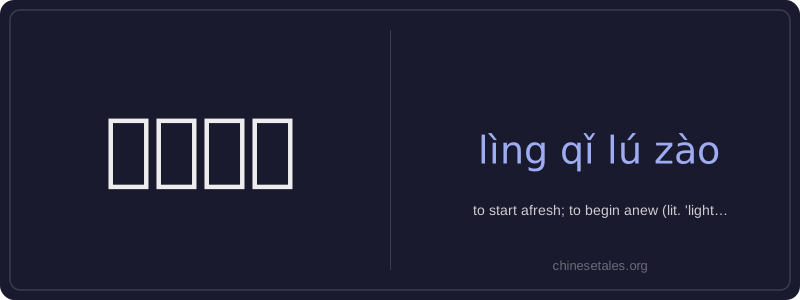
'另起炉灶' is an idiom meaning 'to start afresh' or 'to begin anew'—literally 'to light a new stove.' It originates from the image of abandoning an old, broken stove and building a completely new one to cook, symbolizing a decisive break from previous methods, plans, or relationships. The four characters work together: 另 (‘other,’ ‘different’) signals departure; 起 (‘to start,’ ‘to set up’) indicates action; 炉 and 灶 both mean ‘stove’ (with 灶 being more traditional/domestic), reinforcing the concrete, grounded metaphor of restarting practical work from scratch.
This idiom is commonly used in contexts like business restructuring, academic research shifts, personal life changes (e.g., ending one project to launch another), or organizational reform. It carries a neutral-to-positive connotation—emphasizing initiative and independence—but may imply criticism if the old approach was still viable. It’s not used for minor adjustments; it suggests a fundamental, deliberate reset.
Example Sentences
Related Words
认同
‘认同’ (tóng rèn) is a verb meaning ‘to ident
面条
‘面条’ (miàn tiáo) literally means ‘flour str
背后
背后 literally means 'back + behind' and functions
认为
‘认为’ (rèn wéi) is a transitive verb meaning
不对
不对 (bù duì) literally combines 不 (bù), meani
中学
'Zhōngxué' literally combines 'zhōng' (middle)
见面
见面 literally means 'see face' — combining 见 (t
外语
‘外语’ literally means ‘outside language’ —