Word Explanation
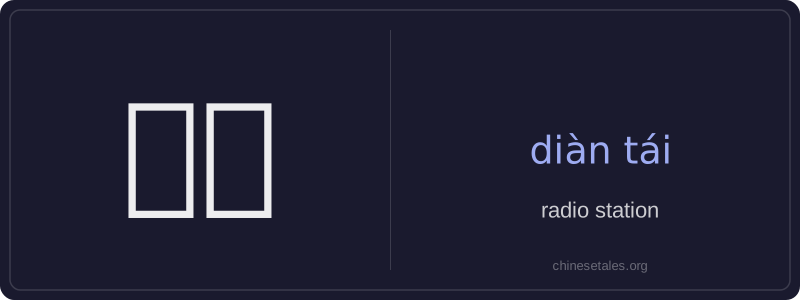
'电台' (diàn tái) literally combines '电' (diàn), meaning 'electricity' or 'electronic', and '台' (tái), meaning 'platform', 'stage', or 'station'. Together, they form the standard term for a 'radio station' — an organization that produces and broadcasts audio content via radio waves. It refers both to the physical broadcasting facility and the media entity itself, including its programming identity (e.g., 'BBC World Service' is called a 电台 in Chinese).
This word is commonly used in daily conversation, news reports, and media contexts. You’ll hear it when discussing favorite shows ('我每天听这个电台的早间新闻'), tuning in ('调频到那个电台'), or referring to station licensing ('这家电台获得了国家批准'). Unlike '广播' (guǎngbō), which is the general activity of broadcasting, '电台' specifically names the institution or channel — similar to how 'TV station' differs from 'television'.
Example Sentences
Related Words
认同
‘认同’ (tóng rèn) is a verb meaning ‘to ident
面条
‘面条’ (miàn tiáo) literally means ‘flour str
背后
背后 literally means 'back + behind' and functions
认为
‘认为’ (rèn wéi) is a transitive verb meaning
不对
不对 (bù duì) literally combines 不 (bù), meani
中学
'Zhōngxué' literally combines 'zhōng' (middle)
见面
见面 literally means 'see face' — combining 见 (t
外语
‘外语’ literally means ‘outside language’ —