Word Explanation
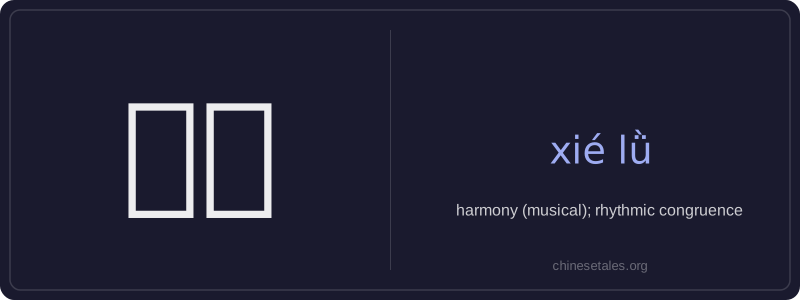
谐律 (xié lǜ) is a formal literary noun meaning 'harmony' in the musical or aesthetic sense—specifically, the pleasing, balanced interplay of tones, rhythms, or elements. The character 谐 (xié) conveys 'harmonious', 'in agreement', or 'congruent', while 律 (lǜ) means 'rhythm', 'cadence', or 'rule'—together they evoke rhythmic congruence and structural coherence. It’s rarely used in casual speech; instead, it appears in classical poetry criticism, music theory, and refined descriptions of natural or artistic order.
Though occasionally extended metaphorically to describe harmony in relationships or ecosystems, 谐律 retains strong associations with sound and pattern. It implies not just absence of discord, but active, intentional alignment—like the synchronized chirping of crickets at dusk or the layered phrasing in a traditional guqin piece. Because of its poetic weight and abstraction, it’s more common in written Chinese than spoken, especially in essays on aesthetics or nature writing.
Example Sentences
Related Words
认同
‘认同’ (tóng rèn) is a verb meaning ‘to ident
面条
‘面条’ (miàn tiáo) literally means ‘flour str
背后
背后 literally means 'back + behind' and functions
认为
‘认为’ (rèn wéi) is a transitive verb meaning
不对
不对 (bù duì) literally combines 不 (bù), meani
中学
'Zhōngxué' literally combines 'zhōng' (middle)
见面
见面 literally means 'see face' — combining 见 (t
外语
‘外语’ literally means ‘outside language’ —