Word Explanation
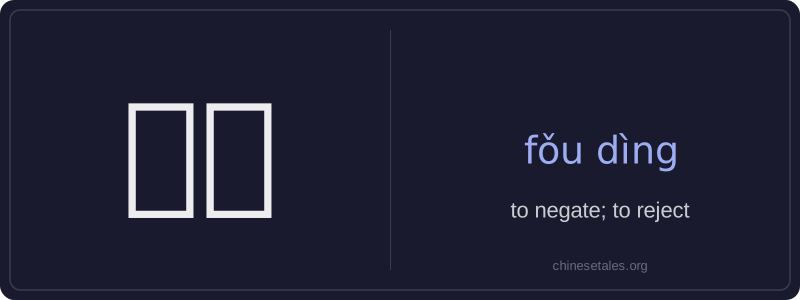
否定 (fǒu dìng) is a verb meaning 'to negate' or 'to reject'—it expresses refusal, denial, or the act of saying something is not true or not acceptable. The first character 否 (fǒu) means 'no', 'not', or 'negation', and the second character 定 (dìng) means 'to decide', 'to fix', or 'to determine'. Together, they convey the idea of decisively rejecting or invalidating a statement, proposal, or belief. It’s commonly used in formal, academic, or critical contexts—for example, when refuting an argument, declining an offer, or expressing disagreement with a viewpoint.
This word carries a stronger, more deliberate tone than casual words like 不要 (bù yào, 'don’t want') or 拒绝 (jù jué, 'to refuse'). It often appears in written Chinese, debates, psychological discussions (e.g., self-negation), or policy documents. While it can be used transitively (e.g., 否定某人的观点), it may also appear in noun form as 否定 (e.g., 自我否定, 'self-negation'), but its primary function is verbal.
Example Sentences
Related Words
认同
‘认同’ (tóng rèn) is a verb meaning ‘to ident
面条
‘面条’ (miàn tiáo) literally means ‘flour str
背后
背后 literally means 'back + behind' and functions
认为
‘认为’ (rèn wéi) is a transitive verb meaning
不对
不对 (bù duì) literally combines 不 (bù), meani
中学
'Zhōngxué' literally combines 'zhōng' (middle)
见面
见面 literally means 'see face' — combining 见 (t
外语
‘外语’ literally means ‘outside language’ —