Word Explanation
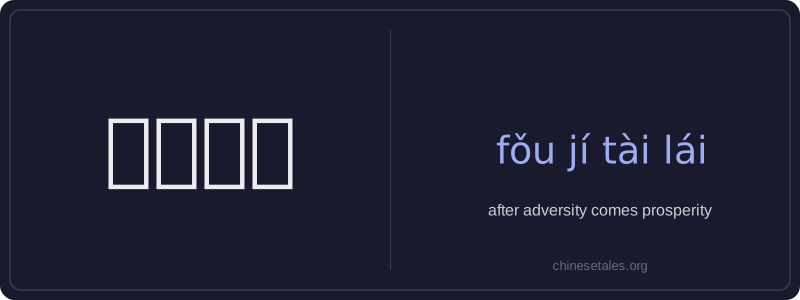
否极泰来 is a classical Chinese idiom rooted in the I Ching (Yijing), where '否' (fǒu) represents a hexagram symbolizing obstruction, decline, or extreme adversity, and '泰' (tài) represents its opposite — harmony, prosperity, and flourishing. Literally, it means 'when negation reaches its extreme, positivity arrives', expressing the philosophical idea that after enduring the worst of hardship, favorable conditions inevitably follow. It reflects the Daoist and Confucian belief in cyclical change and balance.
This idiom is commonly used in formal writing, inspirational speeches, or reflective commentary — especially when describing personal recovery, national renewal, or economic rebound. It carries a tone of optimism grounded in patience and resilience, not passive waiting. Native speakers often use it to comfort others during prolonged difficulty or to underscore a turning point after sustained struggle, implying that the shift is natural and inevitable, not accidental.
Example Sentences
Related Words
认同
‘认同’ (tóng rèn) is a verb meaning ‘to ident
面条
‘面条’ (miàn tiáo) literally means ‘flour str
背后
背后 literally means 'back + behind' and functions
认为
‘认为’ (rèn wéi) is a transitive verb meaning
不对
不对 (bù duì) literally combines 不 (bù), meani
中学
'Zhōngxué' literally combines 'zhōng' (middle)
见面
见面 literally means 'see face' — combining 见 (t
外语
‘外语’ literally means ‘outside language’ —