Word Explanation
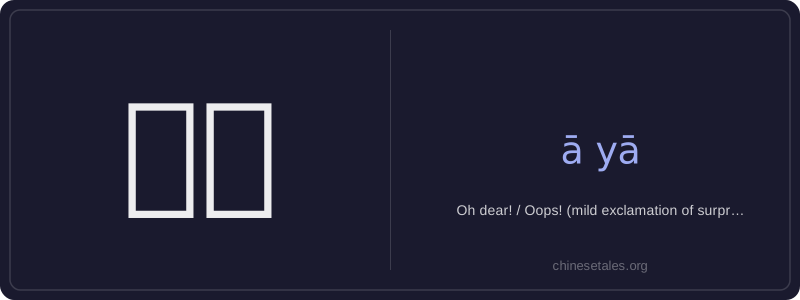
‘啊呀’ is an interjection expressing mild surprise, dismay, or sudden realization—similar to English expressions like 'Oh dear!', 'Oops!', or 'Oh no!'. Though it looks like two separate characters (啊 and 呀), each of which can function independently as exclamatory particles, together they form a fixed, idiomatic exclamation with a distinct tone: softer and less intense than ‘哎呀’ (āi yā), and more conversational than formal written language. It often appears at the beginning of a sentence and carries a gentle, slightly self-deprecating or empathetic nuance.
This expression is commonly used in spoken Mandarin during everyday interactions—when dropping something, forgetting an appointment, noticing a small mistake, or reacting to unexpected but not serious news. It conveys concern or light regret without sounding overly dramatic or emotional. Native speakers frequently use it to soften potentially awkward moments, making it a useful tool for polite, natural-sounding speech.
Example Sentences
Related Words
认同
‘认同’ (tóng rèn) is a verb meaning ‘to ident
面条
‘面条’ (miàn tiáo) literally means ‘flour str
背后
背后 literally means 'back + behind' and functions
认为
‘认为’ (rèn wéi) is a transitive verb meaning
不对
不对 (bù duì) literally combines 不 (bù), meani
中学
'Zhōngxué' literally combines 'zhōng' (middle)
见面
见面 literally means 'see face' — combining 见 (t
外语
‘外语’ literally means ‘outside language’ —