Word Explanation
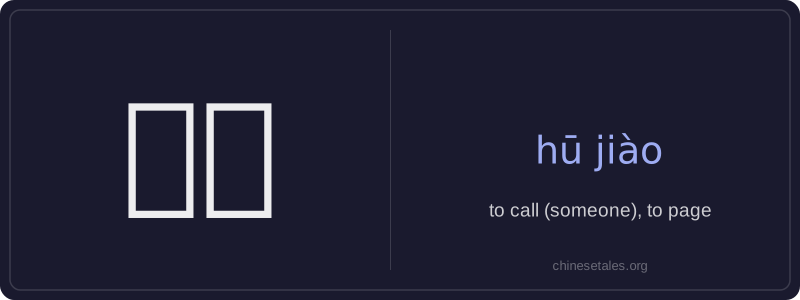
呼叫 means 'to call (someone)' or 'to page' — typically used when contacting another person by phone, intercom, or public address system. The character 呼 (hū) means 'to exhale' or 'to shout', carrying a sense of projecting sound outward; 叫 (jiào) means 'to call' or 'to shout', reinforcing the vocal, intentional act of summoning. Together, 呼叫 emphasizes an active, directed effort to reach someone — not just speaking aloud, but initiating contact. It’s commonly used in formal, technical, or service-oriented contexts, such as office communications, hospitals, airports, or customer support.
Unlike the more casual 打电话 (to make a phone call) or 叫 (to call, often used colloquially), 呼叫 sounds neutral-to-formal and is rarely used for emotional or intimate calling (e.g., calling a friend). It frequently appears in compound words like 呼叫中心 (call center) or 内线呼叫 (internal extension call). In modern usage, it may also refer to initiating a video or voice call via apps or smart devices, especially in professional or automated systems.
Example Sentences
Related Words
认同
‘认同’ (tóng rèn) is a verb meaning ‘to ident
面条
‘面条’ (miàn tiáo) literally means ‘flour str
背后
背后 literally means 'back + behind' and functions
认为
‘认为’ (rèn wéi) is a transitive verb meaning
不对
不对 (bù duì) literally combines 不 (bù), meani
中学
'Zhōngxué' literally combines 'zhōng' (middle)
见面
见面 literally means 'see face' — combining 见 (t
外语
‘外语’ literally means ‘outside language’ —