Word Explanation
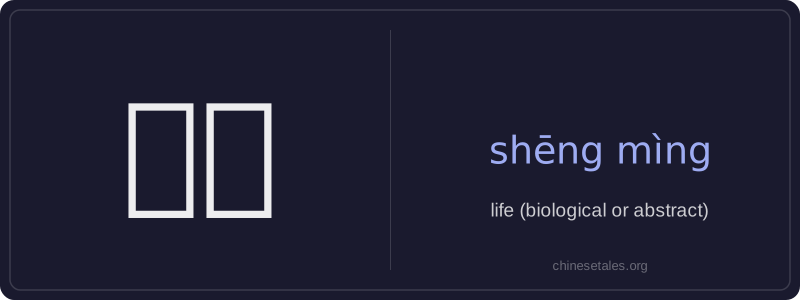
生命 (shēng mìng) literally combines 生 (shēng), meaning 'to be born' or 'to live', and 命 (mìng), meaning 'life' or 'destiny'. Together, they form a core noun meaning 'life' in both biological and abstract senses — referring to the condition that distinguishes living organisms from inanimate matter, as well as to life as a concept, value, or experience. It’s used broadly: in biology ('human life', 'marine life'), medicine ('save a life'), philosophy ('meaning of life'), and everyday speech ('protect life', 'value life').
Unlike the more colloquial word 活 (huó, 'to live') or the poetic 气息 (qìxī, 'breath'), 生命 carries weight and formality — it appears frequently in news headlines, scientific texts, ethical discussions, and solemn expressions. It can be modified by adjectives like 宝贵 (bǎoguì, 'precious') or 短暂 (duǎnzàn, 'brief'), and often appears with verbs like 尊重 (zūnzhòng, 'to respect'), 保护 (bǎohù, 'to protect'), or 失去 (shīqù, 'to lose').
Example Sentences
Related Words
认同
‘认同’ (tóng rèn) is a verb meaning ‘to ident
面条
‘面条’ (miàn tiáo) literally means ‘flour str
背后
背后 literally means 'back + behind' and functions
认为
‘认为’ (rèn wéi) is a transitive verb meaning
不对
不对 (bù duì) literally combines 不 (bù), meani
中学
'Zhōngxué' literally combines 'zhōng' (middle)
见面
见面 literally means 'see face' — combining 见 (t
外语
‘外语’ literally means ‘outside language’ —