Word Explanation
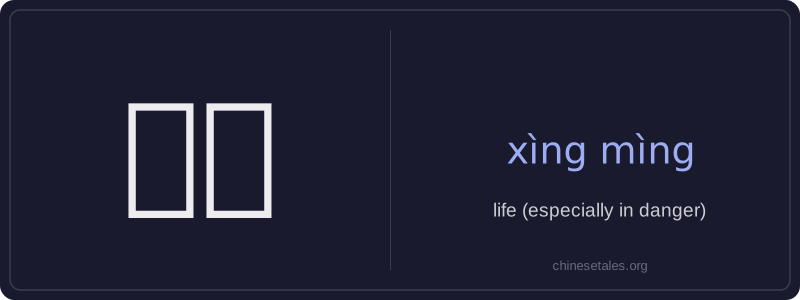
性 (xìng) originally means 'nature' or 'essence', and 命 (mìng) means 'life' or 'destiny'. Together, 性命 literally conveys 'the essence of life'—a weighty, classical expression emphasizing life itself as something fundamental and irreplaceable. It’s not used for everyday references to 'life' (like 生活 shēnghuó or 人生 rénshēng), but rather in contexts where life is at stake: during emergencies, illness, danger, or moral crises.
This word carries strong emotional gravity and often appears in idioms (e.g., 拼性命 'risk one’s life'), warnings ('小心性命!' 'Watch your life!'), or literary or dramatic speech. It’s more common in written Chinese, formal warnings, or spoken expressions of extreme concern—never in casual chat about daily living. While 性 and 命 can each stand alone with related meanings, their compound 性命 functions exclusively as a noun meaning 'life' under threat or high stakes.
Example Sentences
Related Words
认同
‘认同’ (tóng rèn) is a verb meaning ‘to ident
面条
‘面条’ (miàn tiáo) literally means ‘flour str
背后
背后 literally means 'back + behind' and functions
认为
‘认为’ (rèn wéi) is a transitive verb meaning
不对
不对 (bù duì) literally combines 不 (bù), meani
中学
'Zhōngxué' literally combines 'zhōng' (middle)
见面
见面 literally means 'see face' — combining 见 (t
外语
‘外语’ literally means ‘outside language’ —