Word Explanation
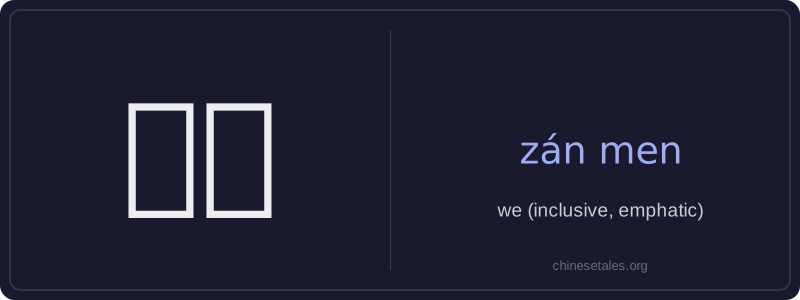
咱们 (zán men) is an inclusive first-person plural pronoun meaning 'we' — specifically including both the speaker and the listener(s). It conveys warmth, solidarity, and informality, often used among friends, family, or colleagues to suggest shared perspective or joint action. The character 咱 (zán) is a colloquial variant of 我们 (wǒmen), while 们 (men) is the standard plural marker for pronouns; together, they form a single lexical unit with no literal compound meaning — 咱 does not mean 'this' or 'our' here, and 们 is not separable in speech or grammar.
This pronoun is common in Northern Mandarin and widely understood across China, especially in spoken language and informal writing. It’s frequently used to soften suggestions ('Let’s…'), express collective responsibility ('We should…'), or build rapport ('How about we…?'). Unlike 我们, which can be exclusive (excluding the listener), 咱们 always includes the person being addressed — making it essential for polite, cooperative communication in everyday contexts like planning, inviting, or giving advice.
Example Sentences
Related Words
认同
‘认同’ (tóng rèn) is a verb meaning ‘to ident
面条
‘面条’ (miàn tiáo) literally means ‘flour str
背后
背后 literally means 'back + behind' and functions
认为
‘认为’ (rèn wéi) is a transitive verb meaning
不对
不对 (bù duì) literally combines 不 (bù), meani
中学
'Zhōngxué' literally combines 'zhōng' (middle)
见面
见面 literally means 'see face' — combining 见 (t
外语
‘外语’ literally means ‘outside language’ —