Word Explanation
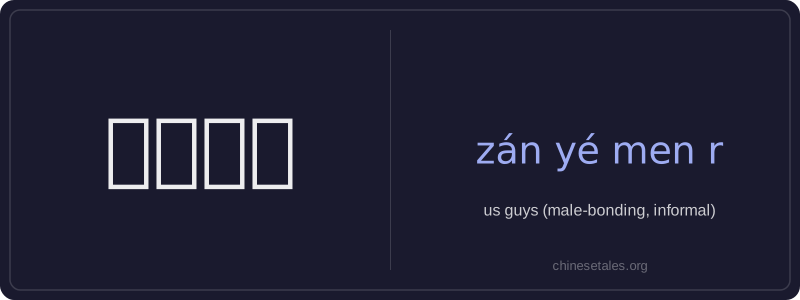
'咱爷们儿' (zán yé men r) is an informal, masculine, first-person plural pronoun meaning 'us guys' or 'we dudes.' It conveys camaraderie, solidarity, and shared identity among male friends, brothers, or teammates — often with a touch of swagger or folksy warmth. Though it literally combines 咱 ('we,' inclusive), 爷 ('sir' or 'old man,' used here as a marker of masculine pride), 们 ('plural suffix'), and 儿 (a Beijing-style diminutive/affectionate rhotacized ending), the phrase functions as a single lexical unit and isn’t parsed literally in speech.
This term is strongly tied to northern Mandarin dialects — especially Beijing and Tianjin — and carries regional flavor and social nuance. It’s used almost exclusively in spoken, casual settings: bantering among friends, sports talk, or nostalgic storytelling. It’s not appropriate in formal writing, professional contexts, or when addressing mixed-gender or female-only groups. The 'r' sound at the end is essential for authenticity and cannot be omitted without losing its colloquial force.
Example Sentences
Related Words
认同
‘认同’ (tóng rèn) is a verb meaning ‘to ident
面条
‘面条’ (miàn tiáo) literally means ‘flour str
背后
背后 literally means 'back + behind' and functions
认为
‘认为’ (rèn wéi) is a transitive verb meaning
不对
不对 (bù duì) literally combines 不 (bù), meani
中学
'Zhōngxué' literally combines 'zhōng' (middle)
见面
见面 literally means 'see face' — combining 见 (t
外语
‘外语’ literally means ‘outside language’ —