Word Explanation
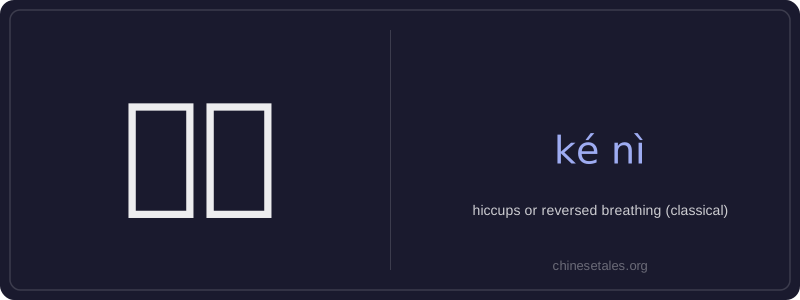
‘咳逆’ is a classical Chinese term meaning ‘hiccups’—involuntary spasms of the diaphragm that cause a sudden intake of breath and the characteristic ‘hic’ sound. Literally, 咳 (ké) means ‘to cough’, and 逆 (nì) means ‘to reverse’ or ‘to go against the normal direction’; together, they evoke the idea of reversed or disrupted breathing, reflecting traditional medical understanding of hiccups as a disorder of qi flow in the stomach and lungs.
This term appears primarily in classical texts, traditional Chinese medicine (TCM) literature, and formal or literary contexts—not in everyday modern speech. Contemporary Mandarin speakers usually say 打嗝 (dǎ gé) for hiccups. 咳逆 carries a slightly technical, archaic, or clinical tone, and may appear in diagnoses, prescriptions, or historical descriptions of symptoms.
Example Sentences
Related Words
认同
‘认同’ (tóng rèn) is a verb meaning ‘to ident
面条
‘面条’ (miàn tiáo) literally means ‘flour str
背后
背后 literally means 'back + behind' and functions
认为
‘认为’ (rèn wéi) is a transitive verb meaning
不对
不对 (bù duì) literally combines 不 (bù), meani
中学
'Zhōngxué' literally combines 'zhōng' (middle)
见面
见面 literally means 'see face' — combining 见 (t
外语
‘外语’ literally means ‘outside language’ —