Word Explanation
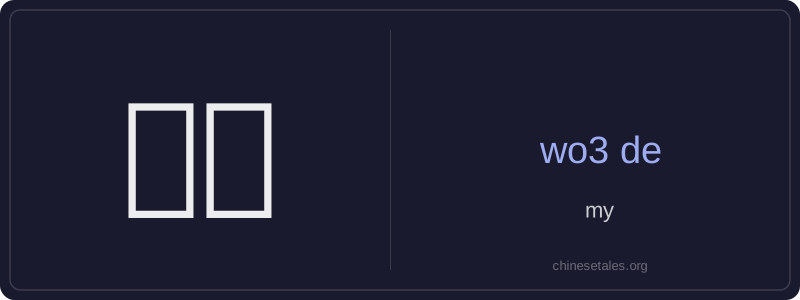
我的 (wǒ de) is a possessive pronoun meaning 'my' in English. It consists of the first-person singular pronoun 我 (wǒ, 'I') followed by the structural particle 的 (de), which marks possession or attribution—similar to the English apostrophe-s ('s) or the word 'of'. Unlike English, 的 must always follow the possessor and precede the possessed noun: 我的 + noun (e.g., 我的书, 'my book'). The particle 的 is pronounced with a neutral tone (de), never as dē or dě.
This phrase is fundamental in daily communication and appears constantly in personal contexts—describing belongings, relationships, feelings, or opinions. It’s used across all registers, from casual speech to formal writing, and is essential for forming simple descriptive sentences. Note that 的 is omitted only in certain fixed expressions (e.g., 我妈, not *我的妈) or when context makes possession unambiguous—but beginners should default to including it for clarity and grammatical correctness.